Loading basket...



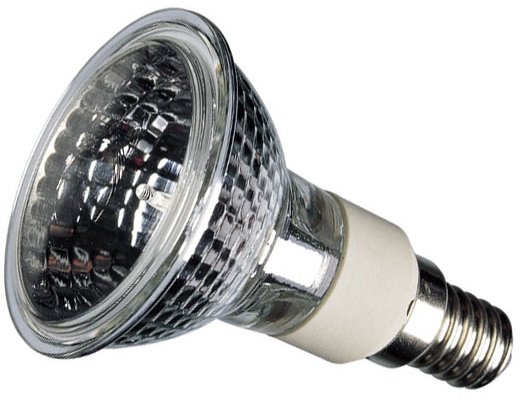
40 Watt Sylvania Hi Spot 50 Par 16 SES 240 Volt (Flood Light Beam)

Quick Find: 5536
Product Discontinued
This item was discontinued on 10th August, 2017
Alternatively check out our full range of similar products below:
Halogen Hi Spot Par Lamps
Beam Angle
36 Degrees
Cap/Base
14mm E14/SES
Colour Temp
2700 K
Diameter
50 mm
Dimming?
Dimmable
Length
75 mm
Light Bulb Type
Reflectors/Spotlights
Light Colour
Warm White (830)
Manufacturer
Sylvania
Type
Light Bulb
Voltage
220-240 Volt
Wattage
40 W
Product Overview
40 Watt Sylvania Hi Spot 50 Par 16 SES 240 Volt (Flood Light Beam) from Sylvania
Model: HPAR16
This Sylvania Par16 Halogen Reflector Lamp is completely interchangeable with an R50 incandescent reflector lamp saving 20% in energy usage. This Small Edison Screw lamp is rated at 40W and features a wide 36 degree beam. Fully dimmable via a standard dimmer switch this bulb emits a crisp sparkling light perfectly suited to precision or decorative lighting in retail, commercial and domestic applications. The lamp life of this bulb is 2000 hours, twice the life compared to an incandescent lamp.
Technical Specifications
| Light Bulb Type | Reflectors/Spotlights |
|---|---|
| Wattage | 40 W |
| Manufacturer | Sylvania |
| Light Colour | Warm White (830) |
| Dimming? | Dimmable |
| Beam Angle | 36 Degrees |
| Colour Temp | 2700 K |
| Diameter | 50 mm |
| Length | 75 mm |
| Cap/Base Type | Edison Screw |
| Cap/Base Type | Small Edison Screw |
| Type | Light Bulb |
| Voltage | 220-240 Volt |
| Cap/Base | 14mm E14/SES |
Associated Product Barcodes
| 5410288210841 |
Alternative Stock Identifier Part Codes
| 40PAR16/SP SES:SYL |
| 40PAR16SES |
| PAR1640SESFLD |
| SYL 40PAR16FL B057 |
Downloads 1
 | Product Data Sheet Sylvania Hi Spot 50 Par 16 40 watt SES |
Frequently Asked Questions 3
What Does Beam Angle Mean?
Fri Apr 2015
The beam angle of a lighting source is the angle between the two opposing points at which the light output from the light source drops to below 50% intensity. A simplified way of thinking about the beam angle of a light source is that it is the angle ...
What are dichronic light bulbs and how can I tell them apart from an ordinary lamp?
Fri Jul 2015
A halogen dichroic light bulb has a reflector that emits the light from the back of the lamp. Used in the wrong downlighter they could cause overheating. You can tell them apart from a ordinary lamp by shining a light at the back of one, if it's ...
Difference between GU4 & GZ4 and GU10 & GZ10?
Fri Jul 2015
The codes for "G Style Cap" light bulbs can seem confusing, the chart below should help to clearly show the differences in the four most popular types (GU4, GZ4, GU10 and GZ10). In order to work out the difference you need to break the code ...


Phil Overton
13th May 2026
Very helpful and prompt with my enquiry. My first contact with them but I will use them in the future.
IAN LINDSAY
11th May 2026
Excellant experiance, quick delivery. Appreciated the personal contact with valued advice, very much appreciated. I would use again.