Loading basket...



Are LED GU10s a Direct Retrofit?
The vast majority of LED GU10 lamps will be a direct retrofit for halogen GU10 lamps. Retrofit in this context means that the bulb can be used as replacement without making any changes to your fitting or wiring. Because they operate on 230/240v as well you will need to worry about the driver/transformer as it will be very unlikely that your fitting has a driver/transformer fitted.
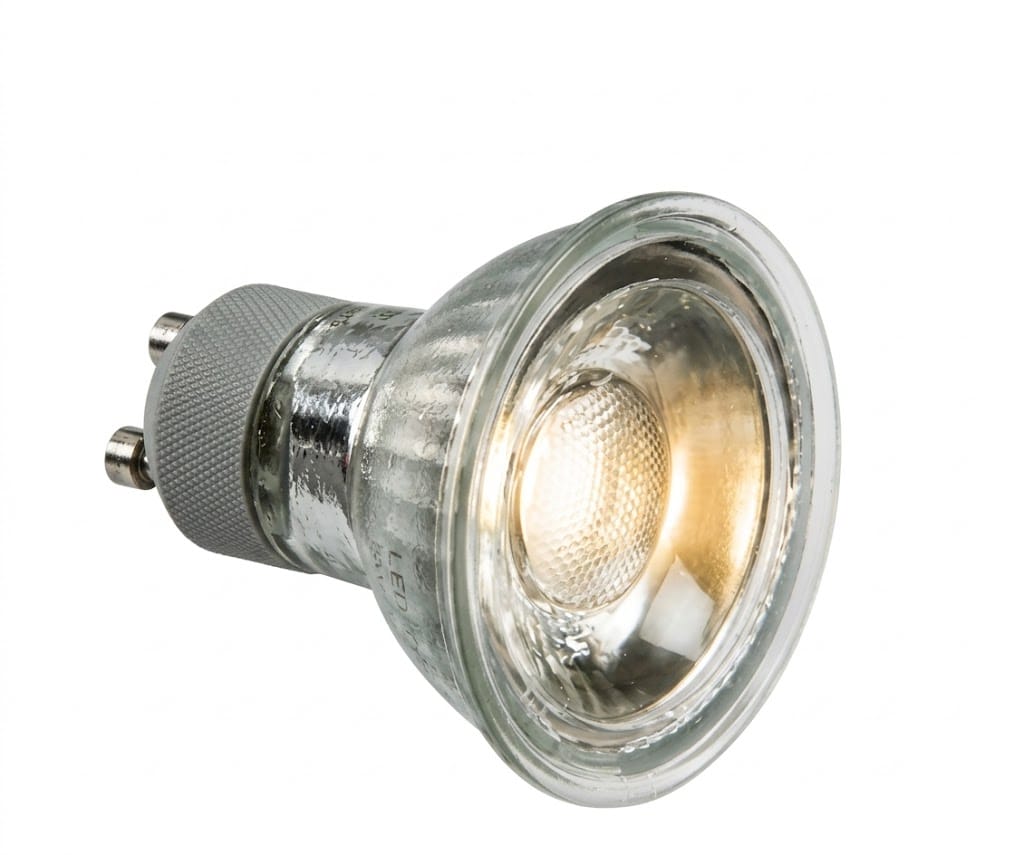
Key Factors for a Successful Direct Retrofit
Whilst they are easy to change over with minimal consideration needed it is worth keeping the below in mind:
1. Physical Compatibility (Size and Shape)
- Standardization: Modern LED GU10s are designed to match the previous standardized shape and size of the older halogen GU10s. This means they are made to have a diameter of 50mm and a two pin base designed to twist and lock into the fitting.
- Dimensional Variations: Some early or specialist high-power LED GU10s may be slightly longer or bulkier than standard halogens. As long as you check the depth and the diameter of your existing bulb and compare it to the LED bulb you are looking to purchase you should be able to find the one that you need.

2. Electrical Compatibility (Voltage and Power)
- Voltage: Both halogen and LED GU10s operate directly on 230V/240V AC (mains voltage) in the UK and Europe. They also do not require a transformer unlike MR16 12v bulbs. If you have any concerns the voltage should be advised on the packaging or the website you are purchasing the bulb from.
3. Dimming Compatibility
- Non-Dimmable LED GU10s: If your fitting is a standard on/off switch and you have no plans to dim the light then any GU10 purchased will be okay whether it is dimmable or non-dimmable.
- Dimmable LED GU10s: If you are looking to dim the lights, some extra considerations will need to be made:
- Leading-Edge vs. Trailing-Edge Dimmers: You will need to find out if your dimmer switch is leading-edge or trailing-edge. A lot of halogen dimmers use leading-edge technology, which may be compatible with your LED GU10 causing it to flicker or to stop working earlier than it should. Most LED GU10s use trailing-edge dimmers (sometimes called universal or electronic) meaning there is a good chance you will need to change your dimmer switch if you are also replacing your bulb.
- Minimum/Maximum Load: Dimmer switches will often have a specific amount of wattage that they can handle. This should be clear when purchasing a new dimmer switch.
4. Enclosed Fixtures
If the LED GU10 is being fitted into an enclosed or sealed fitting (such as a bathroom downlight), you will need to make sure that the LED bulb you have chosen is rated for use in fittings like this. Heat build-up can drastically shorten the LED's life, so you should look for LED bulbs specifically designed for enclosed fixtures. If you use one that is not rated for an enclosed fitting inside an enclosed fitting and it fails outside of the warranty, this may invalidate the warranty.
Created by Adonia Watt on 11th February, 2026
Author
| | Adonia WattI have worked as a customer service representative at BLT Direct since 2018. My skills and knowledge have continued to develop from this point leading me to making contributions on the website. |


Louise Graham
7th October 2026
Excellent customer service throughout and great products
Tammy Fernando
7th October 2026
Great service! Really supportive of all my questions in my journey to go from LED (bad for our health) to incandescent lighting. Thank you so much! Tammy