Loading basket...



Can LED Flood Lights replace metal halide/discharge flood lights?
The LED flood lights can definitely substitute any metal halide and discharge flood light, and in the majority of cases, they are the smarter, long-term decision. In previous times, metal halide lamps were considered the standard when it came to stadiums, parking lots, warehouses, and large outdoor zones due to the brightness of their lamps. Today, they have been replaced by LEDs, which have much higher efficiencies and therefore significantly reduced running costs, and with significantly minimal maintenance.
As an example, a metal halide lamp in fact turns up to a large proportion of its power into heat, rather than light. The LEDs largely use their power in the production of visible light; therefore, the brighter the lights are, the lower the wattage used. In the case of a flood light that is made of metal halide, 400, 600, or even 1000 watts are needed to illuminate a large space or area, which a good quality LED can do with only a small part of the same energy.
Now we can uncover the details, question by question.
Is it Possible to Substitute Metal Halide with LED?
Yes, and you ought to in case you are still using old metal halide or discharge lamps. The replacement is not difficult-the majority of the current LED flood lights are made as direct replacements of metal halide lights. The important item to test is the power supply or ballast. LEDs do not need a ballast as metal halides do, and therefore, you will either bypass it or, in most cases, replace the entire fixture with an integrated unit of LEDs.
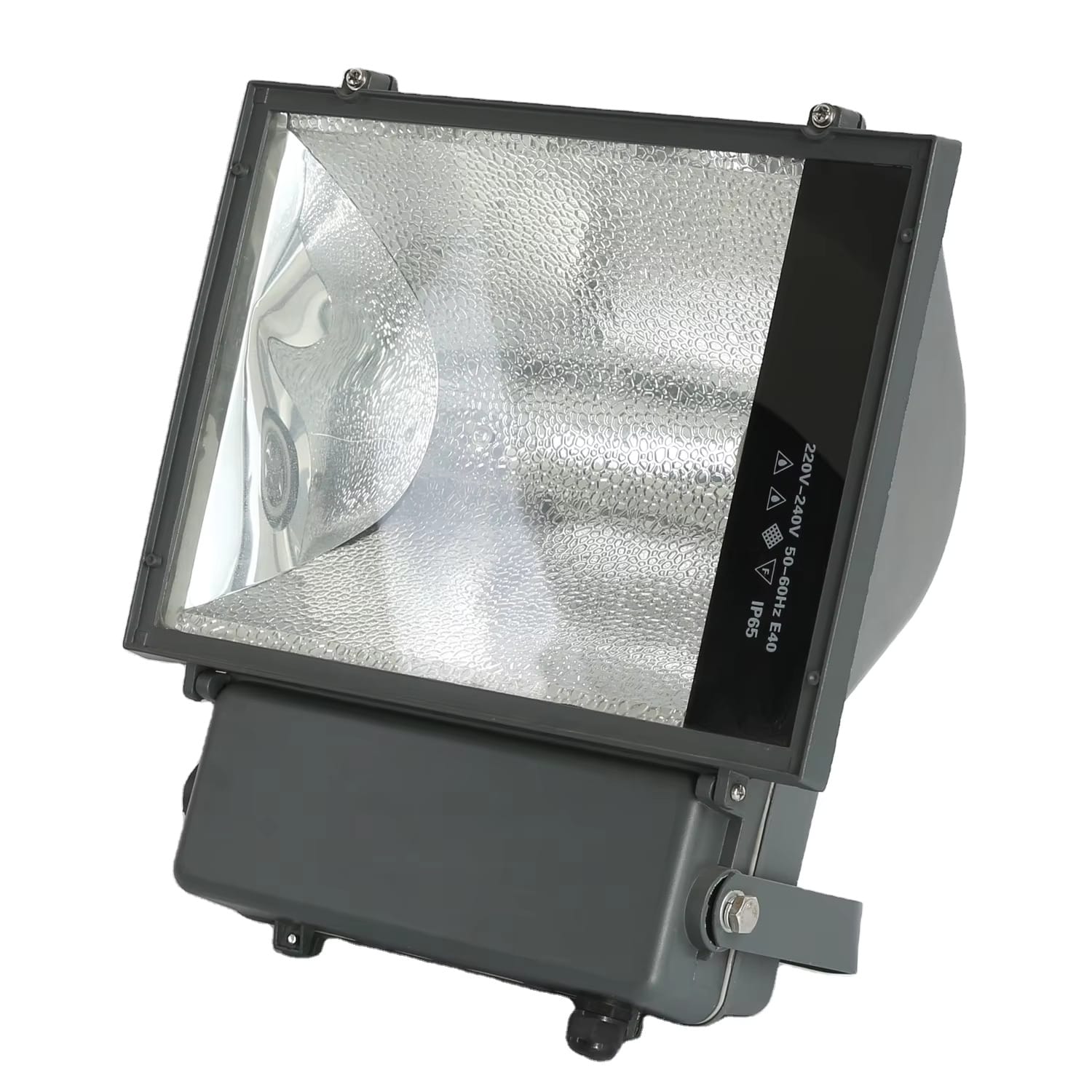
The benefits of switching over are immediate; LEDs can be switched immediately with no warm-up period, as opposed to metal halides; LEDs will not flicker and will last as long as five times. You can also save a lot of electricity bills as LED uses up to 70-80 percent of power to generate the same brightness.
What is the LED Lighting that is equivalent to a 1000 Watt Metal Halide Light?
Approximately 80,000 to 100,000 lumens of new light is generated by a 1000W metal halide flood light. However, the intensity of those lumens decreases over time, with metal halides being capable of losing up to 30 percent of power in the first year alone.
In comparison, a good quality LED flood light with 40,000 to 60,000 lumens would be comparable to or even more than a 1000W metal halide in a real lighting situation. In most cases, however, a 300W to 400W LED flood light will be a great substitute for a 1000W metal halide.
This can simply be explained by the fact that LEDs are far more efficient in terms of lumen-per-watt ratio, and it can be between 130 and 160 lumens per watt, whereas metal halides need to be on the lower range of 70 to 90 lumens per watt.
Is it superior to a Metal Halide compared with an LED?
Not any longer. In the early days of LED development, metal halides were good options, though in most cases, these days, LEDs prevail. Let's look at why.
LEDs consume even less energy, last longer, and never grow dim or discolour. They are also kept bright at all times once they are turned on. Metal halides, on the other hand, require several minutes to reach maximum brightness and wear out rapidly with use.
Maintenance is another colossal dissimilarity: whereas metal halide bulbs require the recurring replacement of every one in two years, LEDs are expected to work around the clock and have a life span of 50000 hours and beyond. That would be several years of constant use. On top of this, LEDs do not contain mercury and are more environmentally friendly.
Metal halide is not better, so no. All categories are LEDs that beat them on energy efficiency, life span, quality of light, and overall savings.
Which would be the equivalent of an LED flood light to a 1000W Halogen?
The efficiency of halogen flood lights is still lower compared to metal halides. An LED takes only 150W to 200W of power to produce 20,000 lumens, which can be generated by a 1000W halogen flood light.
It implies that given the same brightness level, the amount of consumed energy by replacing halogen and LED was reduced by 80 percent. Other than this, LEDs produce significantly lower amounts of heat; hence, the fixtures and wiring wear and tear become less frequent. They can also fit better in outdoor and high-temperature conditions due to the fact that they are equipped with heat sinks to be able to control the temperature. This is because one 150-200W LED flood light can easily substitute a 1000W halogen flood light to provide you with brighter, cooler, and more consistent lighting.
What is the wattage of an LED in relation to a Metal Halide?
No strict rule, but to give a rough estimate, you might say that LEDs consume one-third or even a quarter of the power a metal halide lamp consumes to give the same light output. E.g., a 150-watt LED flood light will replace a 400-watt metal halide. A 1000W metal halide is substituted by a 300W LED flood light. Comparisons differ in terms of the design of the fixtures, optics, and the lumen output, yet the point is, you are drastically cutting energy consumption without dimming the brightness.
The Bottom Line
It is not only efficient but also practical to switch to LED as opposed to using metal halide or halogen flood lights. LEDs have brighter and more reliable lights, lower operating costs, and considerably less maintenance. They also work on a day-to-day basis with no flicker or warm-up period, or fade out of color. Should you feel like updating your lighting system, one of the most intelligent projects you can implement in your lighting system is updating the old metal halide flood lights to LED lights. It’s less polluting, less expensive in the long run, and environmentally superior. Trade-offs are necessary.
Created by Vaibhav Gupta on 3rd November, 2025
Author
| | Vaibhav Gupta
|


IAN LINDSAY
11th May 2026
Excellant experiance, quick delivery. Appreciated the personal contact with valued advice, very much appreciated. I would use again.
Helen Zavros
11th May 2026
I was unsure which bulb to purchase and after calling for assistance the seller gave me some advice and was extremely helpful thanks again