Loading basket...



Can LED Strip Lights Start a Fire?
LED strip lights have become an extremely popular choice of lighting for homes, offices, retail displays, gaming setups, kitchens, and decorative lighting projects. They are a flexible and energy efficient means of light that is available in countless colours and styles. However some people have concerns as to whether or not LED strip lights can become a fire hazard.
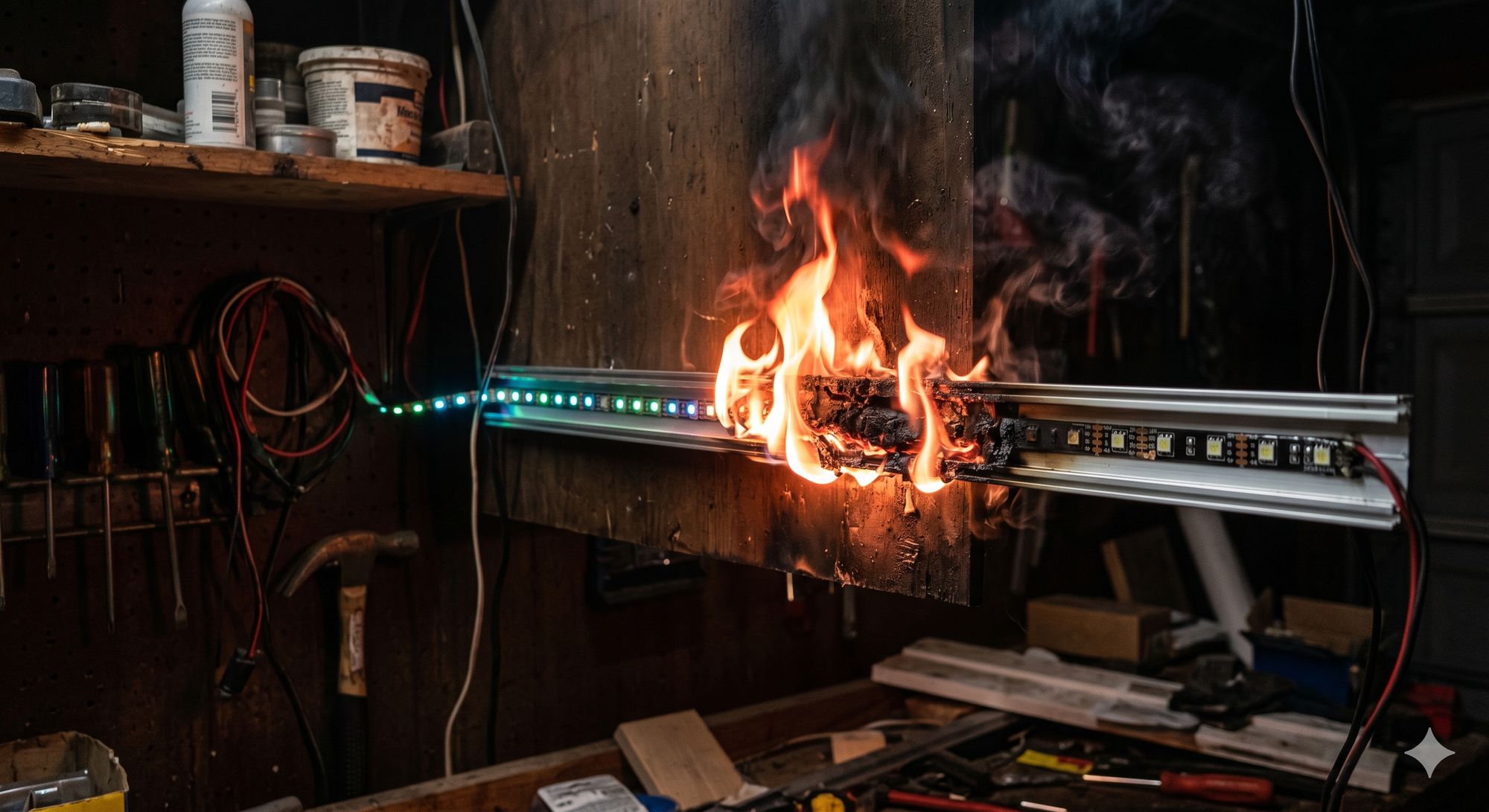
LED strip lights are generally very safe when they are installed and used correctly. LED lights produce far less heat in comparison to incandescent or halogen lighting. However, much like any electrical product problems can occur if poor-quality components are used or if the installation is carried out incorrectly.
One of the main reasons LED strip lights are considered safer than older lighting technologies is their low heat output thanks to how they generate light. Halogen and incandescent bulbs generate substantial heat because they rely on heating a filament in order to create light. LEDs generate light via electroluminescence which is a process that passes an electrical current through a semiconductor which then converts this electricity into light.
You should keep in mind however that LED strips can still become warm during operation. This is especially applicable for high-powered strips that are used for commercial applications or for LED strips used in long continuous runs.
Poor quality LED strips present one of the biggest risks for overheating. Cheaper LED strips may use inferior materials; inadequate insulation, or poorly manufactured circuit boards. In some cases low-cost strips may even lack the proper safety certifications. Choosing a reputable brand and certified LED strip will greatly reduce the likelihood of electrical faults or overheating.
Incorrect power supplies are another common issue that cause faults with LED strips that might lead it to overheat and become a fire risk. LED strip lights require compatible drivers or transformers that provide the correct voltage and wattage. A 12V LED strip for example would require a 12V LED driver. You should always use a power supply recommended by the LED strip manufacturer and ensure it has adequate capacity for the total wattage for your LED strip.
Improper installation is another factor that can increase fire risk. LED strips should be installed on a suitable sturdy and flat surface which has adequate ventilation. Some high output LED strips will state that they require aluminium profiles or heat sinks to help dissipate heat. Installing powerful LED strips in an enclosed or poorly ventilated space can cause excessive heat buildup over time.
Damaged wiring or exposed electrical connections may also create hazards. You should make sure that all cut ends of LED strips are properly insulated and that all connectors are secure. Loose or poorly soldered connections can create resistance which leads to heat buildup and potential electrical failure.
Adhesive backing is another consideration. Most LED strips use adhesive tape for mounting. If a poor quality adhesive is used this can weaken over time, especially in warm environments. If the strip then detaches and falls onto any sort of flammable materials this could also become a fire risk. Using additional mounting clips or aluminium channels is one way in which you can improve installation security.
Water exposure is important to consider as well. Most indoor LED strips are not designed for wet conditions. If you are looking to install LED strips that may be exposed to moisture you will need to purchase one that is IP65 rated or above as this will be moisture resistant. Using non waterproof strips in bathrooms, kitchens, or outdoor spaces can lead to short circuits or corrosion. Choosing the correct IP rating is essential for safe installation. IP20 would be suitable if you are sure that the LED strip will not be exposed to any sort of moisture.
You should also avoid covering LED strips with insulating materials such as fabric, paper, or foam. Blocking airflow around the strips can trap heat and increase the operating temperatures of the strip.
When they are installed properly LED strip lights are generally far safer than many previous types of lighting systems. They will often use a lower voltage; generate less heat, and consume less power.
Below is a summary of steps we have gone through to minimise fire risk when you are installing LED strip:
- Use high quality LED strips from reputable manufacturers.
- Choose the matching power supply and avoid overloading this power supply.
- Ensure that there is good ventilation around the strips.
- Use aluminium channels for high powered strips.
- Secure all wiring and connectors properly.
- Avoid exposure to water unless the strips are waterproof (IP65 rated).
- Never use damaged LED strips.

If you notice flickering; unusual heat, a burning smell, or discoloration, you should switch off the LED strips immediately and inspect them.
Created by Adonia Watt on 28th May, 2026
Author
| | Adonia WattI have worked as a customer service representative at BLT Direct since 2018. My skills and knowledge have continued to develop from this point leading me to making contributions on the website. |


Louise Graham
7th October 2026
Excellent customer service throughout and great products
Tammy Fernando
7th October 2026
Great service! Really supportive of all my questions in my journey to go from LED (bad for our health) to incandescent lighting. Thank you so much! Tammy