Loading basket...



Can LEDs Save Me Money?
Yes, LEDs can save you money. However, it’s a matter of how much you save, given how you utilize them, and what you are replacing. The two things that LEDs are designed to accomplish compared to conventional bulbs are consuming much less energy and having a significantly longer lifespan. These two directly translate into reduced electricity costs and reduced replacements over time.
An average LED consumes up to 80-90 percent of the power that an incandescent bulb produces with the same quantity of light. It means that when you are substituting a 60-watt incandescent with a 9-watt LED, you will immediately notice the difference in your monthly payment. It is not a small saving, but it adds up, particularly when the number of light sources in most homes is in the dozens, and they have to be on for hours every day.
Do LED Lights Save You Money?
Absolutely. The math is not complex: the lower the power used, the lower the cost. Most of the energy is changed by LEDs into light, rather than heat; therefore, there is minimal waste. This is why your LED bulbs do not get hot like old halogen or incandescent bulbs.
Within twelve months, the cost of your lighting bill would be reduced by as much as 70 percent by replacing all of your standard bulbs with LEDs. On top of that, you will replace bulbs much less frequently, as LEDs are capable of a life cycle of decades on average. It is one of those few upgrades that are self-paying and do not require much work.
Do You Really Save Money by Switching Off Lights?
Yes, and this is in case of LEDs as well. The difference is that in the older bulbs, such as fluorescents, there is a saying that when they are turned on and off too many times, it will decrease the life of the bulb. That's not an issue with LEDs. You can turn them on and off a hundred times each day with no harm to their performance or their life cycle.
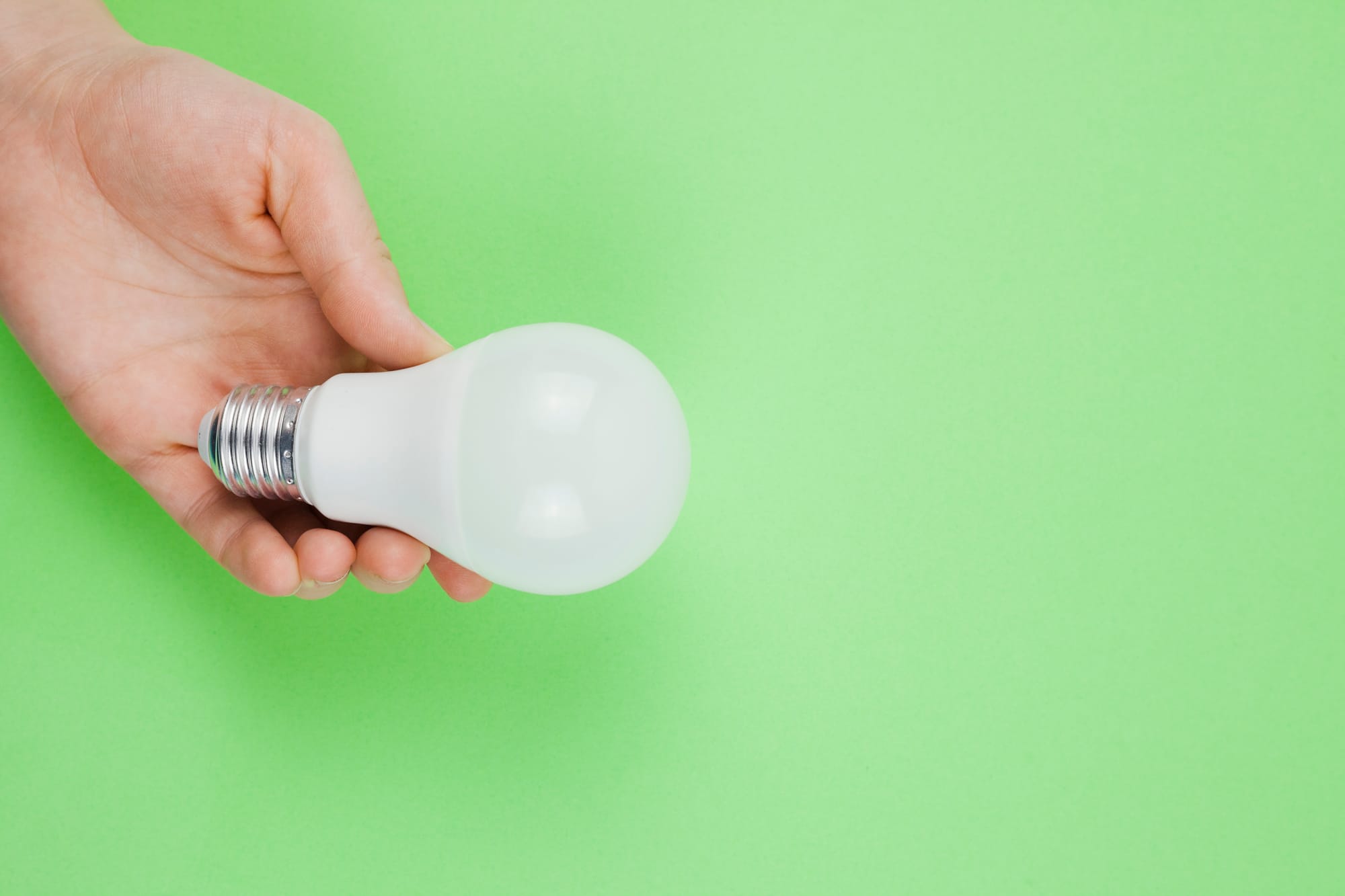
In other words, even when you are leaving a room for a duration of ten minutes, it is still worth putting the switch off. It is a little vice that grows as time goes by. Each watt-hour that you save will decrease your electricity bill by a small amount, and when you add it to the total number of lights in your house, it will be felt at the end of the month.
Is the use of LED light strips Cost-Effective?
It does. LED light strips are constructed using similar technology to save energy as ordinary LED bulbs. The only great variation is in the manner of their use. The strips typically use 4-20 watts/meter of power, depending on the settings of brightness and color. That is a fraction of what would be used by a conventional light fixture at the higher end.
Their specialty is accent lighting, where they can be found beneath cabinets, around mirrors, and behind TVs since they distribute light evenly and consume little power. The only thing to do is to ensure you purchase good-quality strips with the right voltage ratings; the cheap ones may have an inefficient driver that may use much electricity or burn off prematurely.
What is the Cost of operating an LED Light for 24 Hours?
If you’ve got a 10-watt LED bulb, and your electricity costs about £0.30 per kilowatt-hour (a typical UK rate in 2025), running that bulb continuously for 24 hours would cost roughly 7 pence. That’s less than the price of a biscuit for an entire day of light.
Now compare that with a 60-watt incandescent bulb running for the same 24 hours - it would cost around 43 pence. Doesn’t sound like much at first, but multiply that by every bulb in your home, running every day, and the difference adds up fast.
In short, LEDs don’t just save energy - they save real money. Over a year, that gap can easily reach tens of pounds in reduced electricity bills, all while lasting far longer than traditional bulbs.
How Many Hours Can LEDs Last?
Here, LEDs greatly lead the way. A high-quality LED should not have a short life of less than 25,000 hours and up to 50000 hours. In terms of that, assuming that you spend approximately three hours a day using a light, you can have over 20 years of light.
The longevity is not only convenient but also cost-effective. Each time you do not need to purchase or change a bulb, it would be a savings. Factor in the reduced amount of electricity consumed, and the savings in the long term are beyond doubt.
Bottom Line
The LED will help you save money in several ways, such as consuming less energy, replacing them less often, or even saving through clever practices such as switching them off when not in use. Be it changing bulbs to LEDs, turning on LED strips, or simply worrying about the consumption of energy, every little step will lead to a decidedly reduced electricity bill.
Created by Vaibhav Gupta on 3rd November, 2025
Author
| | Vaibhav Gupta
|


IAN LINDSAY
11th May 2026
Excellant experiance, quick delivery. Appreciated the personal contact with valued advice, very much appreciated. I would use again.
Helen Zavros
11th May 2026
I was unsure which bulb to purchase and after calling for assistance the seller gave me some advice and was extremely helpful thanks again