Loading basket...



Choosing the Right LED Flood Light to Replace a Halogen Flood Light
Choosing to replace your halogen floodlight with LED is undoubtedly a cost effective and forward thinking solution. It will save energy used in the longer term and also save costs in terms of maintenance. To choose the correct LED floodlight you will need to compare the lumens rather than the wattage.

The Fundamental Difference: Watts vs. Lumens
Halogen floodlights are inefficient compared to LED. A large portion of the energy they use (watts) is wasted as heat, meaning that a higher wattage is required to produce the desired amount of light. LEDs however do not need to use anywhere near as much wattage as almost all of the energy used goes straight into being converted into light.
When replacing a halogen floodlight your goal should be to match the lumens of the old lamp as closely as possible.
The Key Metric: Matching Lumens
To select the correct LED replacement, you must first determine the lumen output of your current halogen floodlight or the required light level for your lighting project. Below is a rough guide on the amount of lumens halogen floodlights produced based on their wattage:
Once you have a rough idea of how many lumens you desire you can then choose an LED floodlight. The lumens should be advised by the manufacturer on the packaging or on the website where you are purchasing the light from.
Other Critical Factors to Consider
While lumens are an important way to compare these two types of floodlight there are a few other factors to consider:
1. Color Temperature (CCT)
Color temperature refers to the colour hue of the light and this is measured in Kelvin (K). Halogen lights are normally around 2700K to 3000K and this is described as very warm/warm light. There are generally three classifications when describing white colour temperature: Warm White (2700k-3000k); Cool White 4000k and Daylight (6000K-6500K).
For a floodlight you will likely want a Cool White or Daylight colour temperature and it appears brighter and will enhance contrast.
2. Beam Angle
The beam angle determines how wide or narrow the beam of light is that is coming from the floodlight. For a floodlight you will likely want a larger beam angle of 90 degrees or more to cover as much light as possible.
3. IP Rating (Ingress Protection)
Since floodlights are mostly used outdoors fixtures, it is important to purchase one that is resistant to dust and water. An IP rating uses two digits: the first is for (dust) and the second for liquid resistance (water). An IP65 rating should be a minimum requirement for using any light outdoors. If you believe the floodlight could be exposed to heavy rain or water loads you should think about purchasing an IP66 or IP67 rated floodlight.
Summary of the Replacement Process
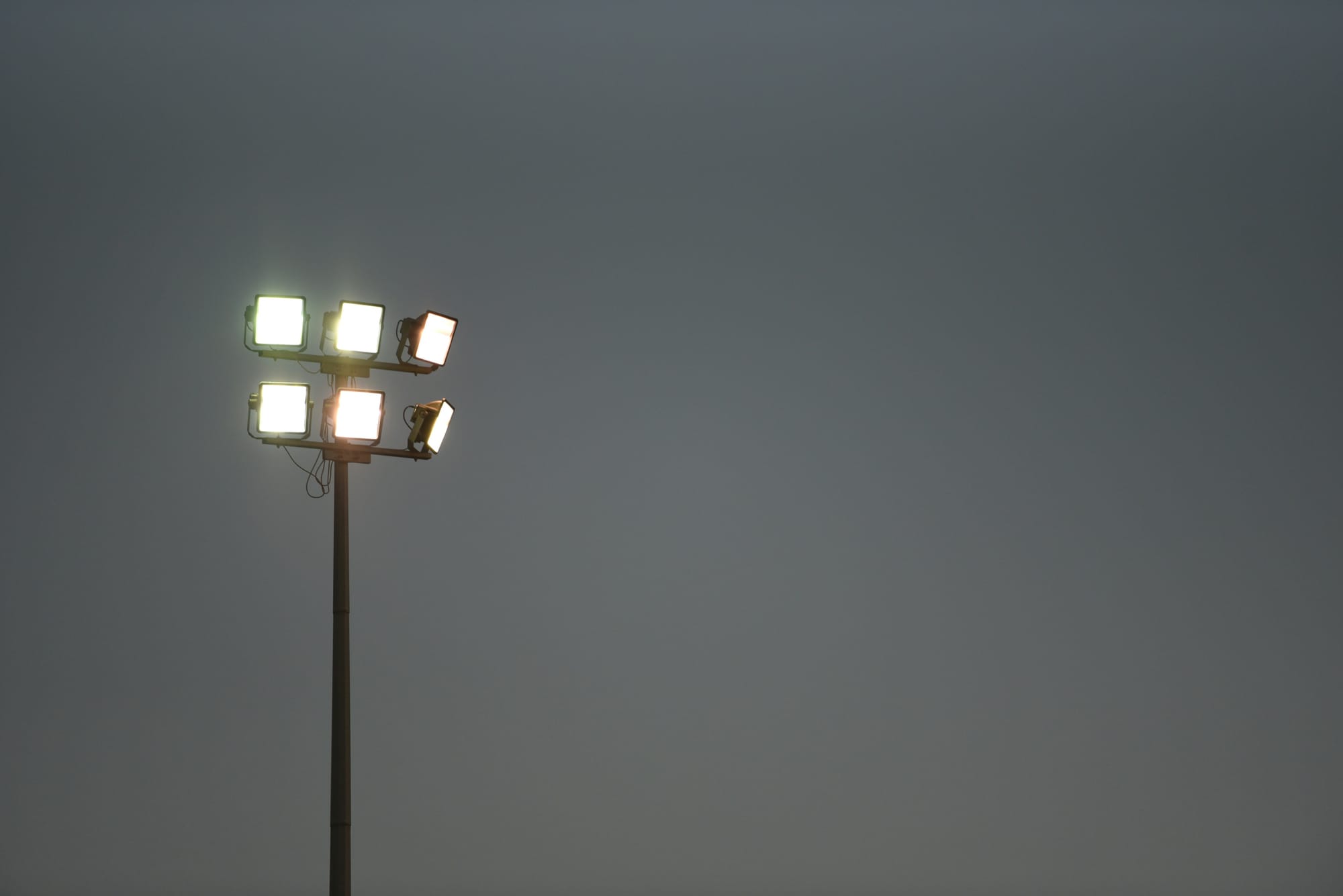
In conclusion when looking for an LED replacement floodlight you should most importantly compare the lumens to your older halogen floodlight. This should be advised by the manufacturer or seller. You should then make it is the colour temperature you desire and double check the beam angle and the IP rating.
Created by Adonia Watt on 2nd January, 2026
Author
| | Adonia WattI have worked as a customer service representative at BLT Direct since 2018. My skills and knowledge have continued to develop from this point leading me to making contributions on the website. |

Louise Graham
7th October 2026
Excellent customer service throughout and great products
Tammy Fernando
7th October 2026
Great service! Really supportive of all my questions in my journey to go from LED (bad for our health) to incandescent lighting. Thank you so much! Tammy