Loading basket...



Do I need an electrician to install LED strip lights?
LED strip lights are a rapidly growing lighting solution that offer style, ambience, and functionality for both residential and commercial spaces. Whether used for under-cabinet lighting in a kitchen or to create mood lighting in a living room, LED strips provide a level of versatility and efficiency that traditional lighting cannot match. However, before installation, one important question often arises: Do I need an electrician to install LED strip lights, or can I install them myself? Let’s explore the answer.
Understanding LED Strip Lights
Before diving into installation, it’s helpful to understand what LED strip lights are. They are thin printed circuit boards with small LED chips mounted in a linear arrangement. Many strips include an adhesive backing for easy installation and are powered by low-voltage DC from a driver. They come in various types, including single-colour, RGB (colour-changing), and addressable strips for dynamic lighting effects.
Basic Components Required
1. LED strip light: The light source itself
- Power supply: Converts AC mains voltage to low-voltage DC
- Controller (for RGB or smart strips): Allows colour, brightness, or pattern control
- Connectors and accessories: For cutting, extending, or joining strips
Understanding these components will help determine whether a DIY installation is suitable or if a licensed electrician is required.
When Hiring an Electrician Makes Sense
There are situations where hiring a professional is the safest and most practical option.
1. High-Voltage or Hard-Wired Installations
Most LED strips run on 12V or 24V, which is generally safe for DIY installation. However, any setup that involves mains wiring, integration into an existing lighting circuit, or connection to a wall switch should be handled by a qualified electrician to ensure compliance with safety regulations and prevent electrical hazards.
2. Large or Complex Installations
For multi-room setups, long power runs, or smart/zone-controlled systems, the wiring and power calculations become more complex. An electrician can ensure the system is designed and installed safely.
3. Outdoor or Wet-Area Installations
LED strips used outdoors, in bathrooms, or in other moisture-prone areas must be waterproof and properly sealed. A professional will ensure all joints, connections, and fittings meet the correct IP rating and are protected against short circuits.
4. Smart Home Integration
If the strips need to work with voice assistants, smart switches, or home automation hubs, a professional can handle controller setup, Wi-Fi configuration, and system troubleshooting.
When DIY Installation Is Suitable
In many cases, LED strips can be installed safely without professional help, particularly when:
1. Small, Simple Projects
Examples include lighting a shelf, TV backlighting, a desk, or a display cabinet. These usually involve peel-and-stick strips with a plug-in power supply.
2. You’re Using Pre-Built LED Strip Kits
Many retail kits include everything needed—strip, driver, connectors, and basic instructions—making them ideal for beginners.
3. The System Uses Low-Voltage Plug-In Power
Low-voltage (12V/24V) LED strips powered by a standard plug-in adapter are generally safe for DIY users, as no mains wiring is involved.
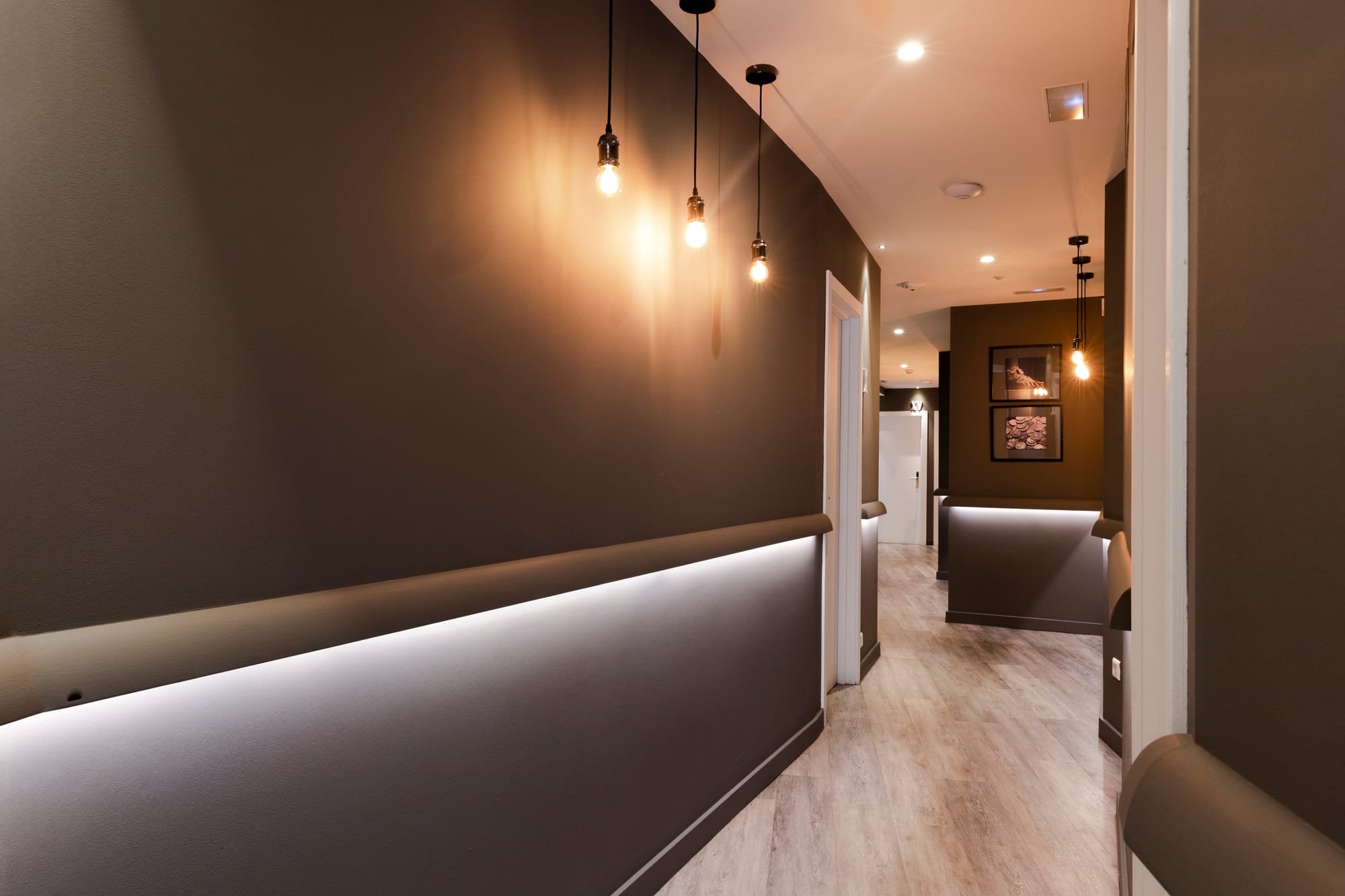
Step-by-Step DIY LED Strip Installation Guide
Step 1: Plan Your Layout
Measure the installation area and determine where the power supply will connect.
Step 2: Prepare the Surface
Ensure the surface is clean, dry, and dust-free for proper adhesion.
Step 3: Trim the Strip (if needed)
Only cut along the marked cut points to avoid damaging the circuit.
Step 4: Plug in the Power Supply
For plug-in supplies, simply connect and secure polarity (+/–). For wired connections, ensure all terminals are firmly tightened.
Step 5: Install the Strip
Peel off the adhesive backing and press firmly into place. Use mounting clips if necessary.
Step 6: Test the Lights
Turn the lights on before final placement to confirm full functionality.
Step 7: Optional: Install Controllers
Follow the manufacturer’s instructions for RGB, dimming, or smart control setup.
Avoid These Common Pitfalls
1. Undersized power supply – Always match wattage + 20% overhead
2. Ignoring voltage drop on long runs – Power from both ends if required.
3. Incorrect waterproofing – Use IP65+ strips in wet areas
4. Bending strips too sharply – Can break circuits and kill LEDs
5. Poor surface prep – Adhesive will fail on dusty or greasy surfaces
Advantages of Having an Electrician
Professionals have some benefits even for a basic installation:
1. Safety compliance – Correct wiring reduces risk of fire or electric shock
2. Long-term reliability – Proper connections and heat management extend lifespan
3. Cleaner finish – No visible cables, neat corners, flush mounting
4. Expert troubleshooting – Issues can be diagnosed and resolved on-site
Created by Vaibhav Gupta on 16th October, 2025
Author
| | Vaibhav Gupta
|


Mark Delaney
18th February 2026
Just awesome service. Super fast and well packaged delivery. Great communication throughout process. And additionally, I forgot to purchase 2 extra items in my original order resulting in extra delivery charges had I not just emailed to ask - and they were so helpful and generous and helped me out! Will be sure to recommend and re-order. Thanks again.
Diana
8th February 2026
Easy to navigate site, with very wide range of products for both professional and non-professional.