Loading basket...



Do Smart Bulbs Work Without Wi‑Fi?
Smart lighting has become increasingly popular in modern homes and businesses. Smart bulbs offer many convenient features such as a remote control, voice commands, scheduling, colour changing, and automation. However, many people wonder if their smart bulbs will still work if the Wi‑Fi connection goes down or if there is no internet available. The answer to this will depend on the type of smart bulb you have and the technology it uses.
The majority of smart bulbs are designed to connect through Wi‑Fi, Bluetooth, Zigbee, Z-Wave, or a dedicated hub system. Understanding how these systems operate will help us to clarify what functions will remain available for the bulbs without Wi‑Fi.

In most cases smart bulbs will still function as basic lights even if Wi‑Fi is unavailable. This means that they would turn on or off at a wall switch or dim if you have a dimmer switch on the wall. However, many smart features can become unavailable until the internet or network connection is restored.
Wi‑Fi smart bulbs connect directly to your home wireless network. Popular brands often use apps that allow users to control brightness, colour, schedules, and automation remotely. If the Wi‑Fi connection fails these bulbs may lose app control and any voice assistant integration they have. Voice assistants such as Amazon Alexa, Google Assistant, and Apple HomeKit usually require internet connectivity for voice commands.
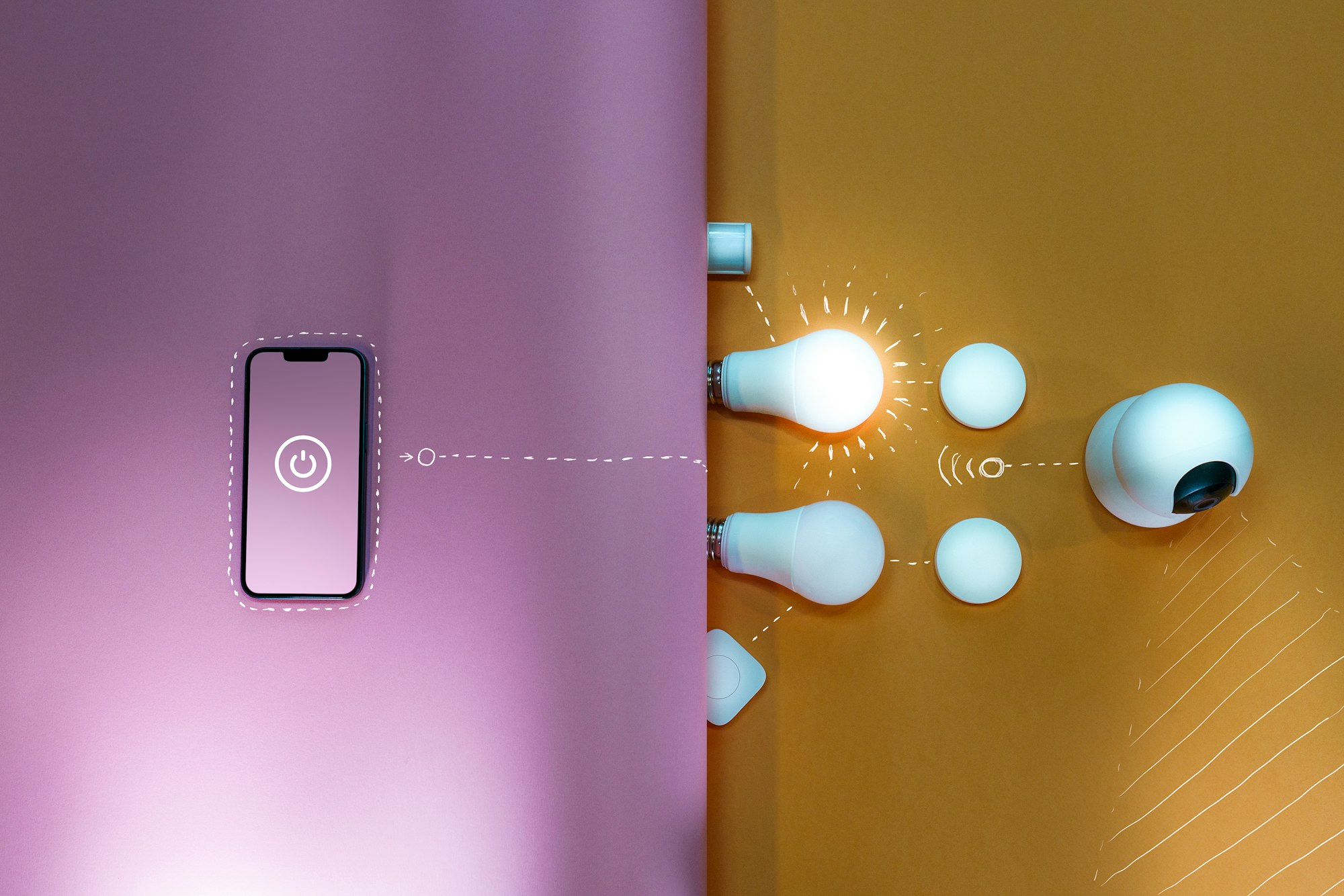
Bluetooth smart bulbs operate differently. Because these bulbs connect directly to your smartphone or tablet through Bluetooth rather than the internet most of the functions should continue working without Wi‑Fi. The downside is that Bluetooth typically has a shorter range than Wi‑Fi meaning that you will have to be closer to the bulbs with your device than you would for Wi-Fi smart bulbs.
Zigbee and Z-Wave smart lighting systems often use a central hub. These systems create local mesh networks that allow devices to communicate with each other meaning that any signals sent to one bulb from your smart device will be submitted to other devices connected to it. In many cases automations and controls can continue functioning locally even if the internet connection is lost. This makes this type of hub-based smart lighting systems particularly reliable for smart homes.
Scheduling and automation features will vary depending on the platform. Some smart bulbs are able to store schedules directly within the bulb or hub allowing routines to continue even without internet access. Others rely on cloud based servers meaning that they may lose automation functionality during outages. This information should be advised within the instructions for the bulb.
Another important consideration is the initial setup for smart bulbs. Most Wi‑Fi smart bulbs require internet access during installation and configuration. Once they have been configured some local functionality may remain available even if the internet is later disconnected.
Businesses can make use of smart lighting systems for energy management and automation. Offices, hotels, warehouses, and retail stores will often integrate smart lighting into building management systems. In these environments local network reliability and backup systems are particularly important.
When you are purchasing a smart bulb it is worth considering exactly which features matter the most to you. Some users prefer smart lighting systems that do not rely heavily on cloud services. This is because local control systems can offer reduced dependence on internet connectivity and potentially faster response times.
To summarise - most smart bulbs do work without Wi‑Fi in a limited capacity. At a minimum they will work as standard lights through normal wall switch operation. However, smart features such as app control, remote access, voice commands, and cloud-based automation may stop working until the connection is restored.
Created by Adonia Watt on 28th May, 2026
Author
| | Adonia WattI have worked as a customer service representative at BLT Direct since 2018. My skills and knowledge have continued to develop from this point leading me to making contributions on the website. |


Louise Graham
7th October 2026
Excellent customer service throughout and great products
Tammy Fernando
7th October 2026
Great service! Really supportive of all my questions in my journey to go from LED (bad for our health) to incandescent lighting. Thank you so much! Tammy