What does wavelength and frequency mean?
Light can be defined as a form of electromagnetic radiation. Wavelength and frequency therefore become relevant concepts when discussing light. We will talk about what both of these mean and how they are relevant to light below.
Wavelength
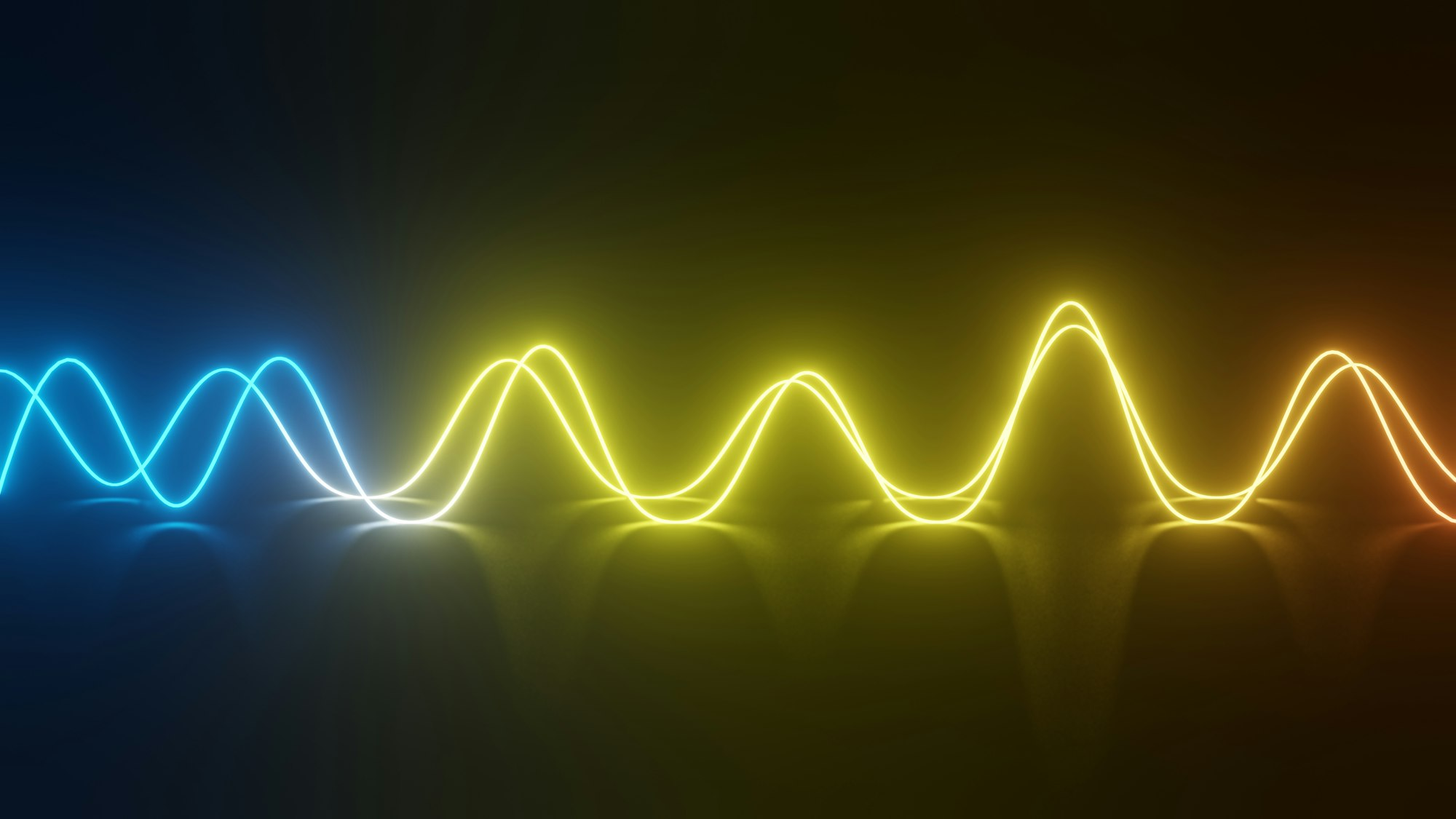
Wavelength refers to the distance between successive crests of a wave within an electromagnetic field. It can also be defined as a measure of the size of one complete cycle of the wave.
Units
Wavelength is a measure of distance and it is measured in nanometers (nm). A nanometer is a billionth of a meter.
The wavelength of light determines its color. Shorter wavelengths will refer to the blue/violent end of the spectrum and longer wavelengths will correspond to the red end of the spectrum with other colours being found in between these two.
Frequency
Frequency is a measure of how often a wave repeats itself that passes a fixed point within a single second. It tells us how rapidly the electric and magnetic fields that create the light wave are oscillating. UV or blue is defined as high frequency light and red and infrared light is defined as lower frequency.
Units and Hz in Light
The standard unit for frequency is hertz (Hz) and one hertz is defined as one cycle per second. When this term is applied to light it shows us the number of cycles of light that occur each second.
The Electromagnetic Spectrum
Wavelength and frequency are used to categorise all forms of electromagnetic radiation, which together forms the electromagnetic spectrum. This spectrum includes long-wavelength, low-frequency radio waves, extremely short-wavelength and high-frequency gamma rays.
The visible light spectrum runs on a tiny percentage within this vast range, closely followed by infrared and ultraviolet light. Manipulating and controlling the wavelength with lighting and understanding its relationship to the energy frequency is critical for everything from LED design to photobiological safety standards.
