Loading basket...



How long does an LED bulb last? Everything you need to know about the lifespan of an LED bulb
LED lighting technology has revolutionised and updated the options we have for home, retail and commercial lighting as we know it. All LED bulbs will have a warranty to cover them lasting for a year minimum; often much longer. And they use a much lower amount of wattage for the same amount of lumens. For example a 6w LED GU10 bulb will cover the same amount of brightness as a 50w incandescent GU10 bulb.
The lifespan of an LED bulb can be more difficult to define than the lifespan of an incandescent bulb. This is because when an incandescent bulb fails it will often completely die out when the filament breaks. An LED light however will rarely burn out in the same way as the majority of “faults” with LED bulbs will have to do with lumen depreciation and component failure.
Lumen Depreciation (L70 Standard) - What does it mean and what do you need to know about it?

The L70 standard is used to define when an LED is operating below optimal levels. It defines this as when the LED’s light output from the light has reduced to 70% or below its original brightness levels.
At this stage it has been found by most people that when the LED’s brightness has been reduced by this much it becomes noticeable and will often not be adequate for its intended purpose. The light may continue to last for many thousands of hours giving you time to find a replacement as required.
All LED bulbs are covered for 1 year minimum if not longer and this warranty is given with the L70 standard in mind meaning that will likely have some light in your bulb until you are able to find a replacement.
What happens when an LED bulb completely stops working?
Now that we have gone through what an L70 rating is for an LED bulb it will be useful to talk about what happens to an LED bulb when it completely stops working. Statistically the complete failure of an LED light is often caused by failure of a supporting electrical component such as a connected driver.
The three most commonly linked items for faults of an LED light are:
- The Driver: The driver is a small circuit board that will convert the AC (alternating current) from your 240v home wiring to the required low voltage DC (direct current) needed by the LED chip in the light (such as 12v or 24v). An LED driver will often contain electrolytic capacitors which are sensitive to heat and can dry out or fail over time. It has been found that a faulty driver is the most common cause of an LED light no longer working.
- Heat Dissipation (Heatsink): LEDs lights are sensitive to heat. While they don't produce the same amount of heat as an incandescent bulb, the electronic driver and the process of current conversion generates heat. For this reason LED bulbs will have something called a heatsink (this is usually a finned base of the end of the bulb) and if this is poorly designed or installed into an enclosed fixture that traps heat, the high temperature can accelerate the degradation of both the LED chip and the driver components possibly causing a premature failure outside of its warranty period.
- The LED Chip/Filament: An LED chip is extremely durable but if it is exposed to continuous overheating or extreme power surges this can cause it to fail sooner than it should. It is worth noting however that this has been found to be the least common cause of failure for an LED light.
What other factors can influence the actual lifespan for an LED light?
The advised warranty and total operating hours for an LED light as advised by the manufacturer will have been assessed in a laboratory under ideal testing conditions. There are some external factors that can potentially shorten the lifespan of your LED light outside of these conditions. We will go through these below:
1. Operating Temperature
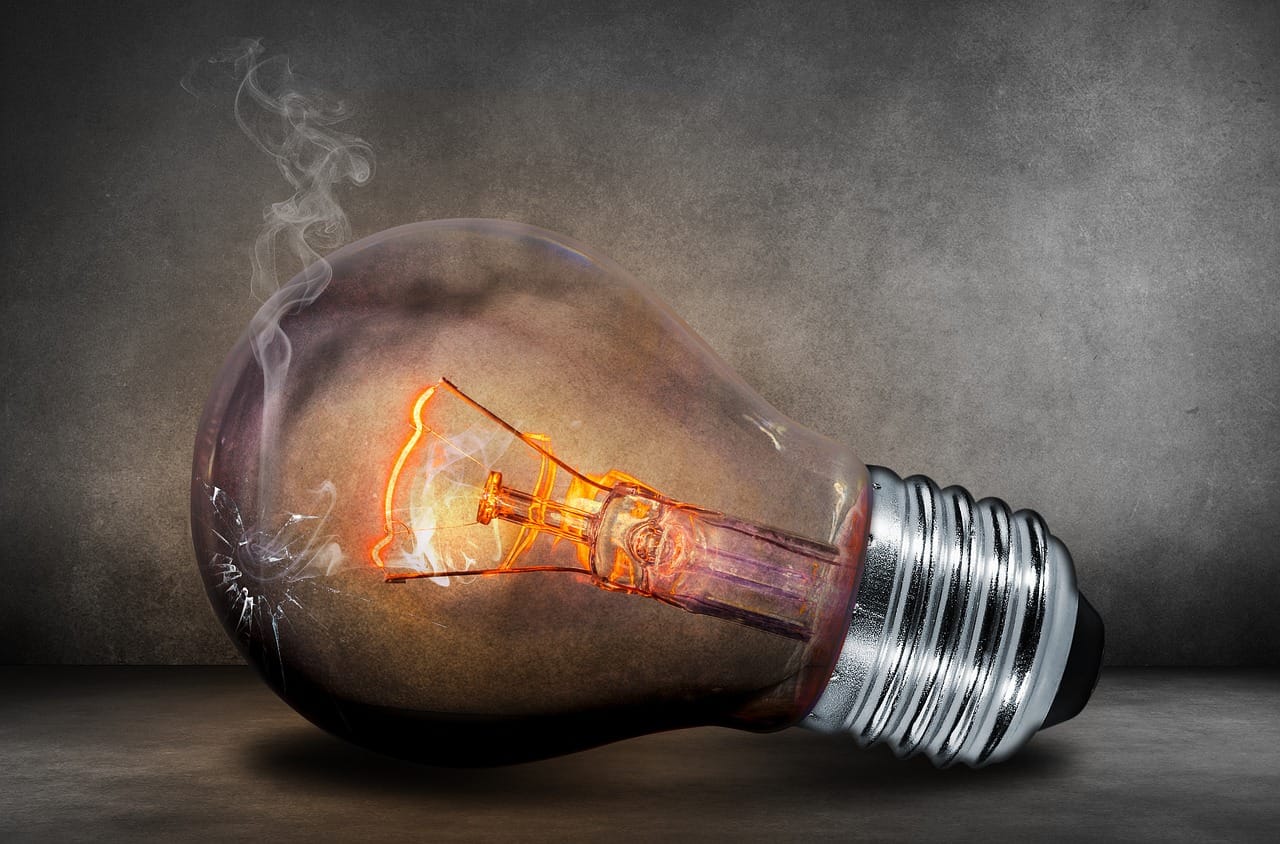
Too much heat can lead to your LED bulb dying out much quicker than it should. For this reason it is worth paying extra attention to where you are choosing to install your LED light for this reason. If you are needing to use the LED light in an enclosed fixture for example this fitting can trap heat and potentially affect the performance of the LED. If you have this type of fitting you should look for LED bulbs that state they are suitable for enclosed fixtures.
It is also important to consider the ambient temperature of where you are installing your LED light. Any LEDs used in hot environments such as in an attic or industrial setting will degrade faster than if they are being used in a cooler setting.
2. Frequency of Use (Switching Cycles)
A switching cycle for lights refers to the number of times a light is turned on/off. LED bulbs have been found to be much more robust when it comes to the number of switching cycles that it can go through in its lifetime. However it is important to connect your LED bulb to a good quality driver as a low quality driver can be affected by switching cycles as well as the initial surge can place stress on the electrical components within the light set up.
3. Voltage Fluctuations
The majority of LED drivers are designed to handle 220-240 volts (standard household voltage) but electrical anomalies such as power surges; brownouts or sustained over-voltage can reduce the lifespan of the driver components which will inevitably lead to your LED bulb no longer working as it should.
4. Dimming
It is important to make sure that your LED bulb is dimmable if you are planning to dim the bulb. A non dimmable LED bulb will not dim as you wish and can reduce the life of the driver as well as the bulb itself. You should also make sure that you are using a compatible dimmer switch for the type of LED bulb that you are using.
Additional Related Questions
1. How does the quality of the LED bulb affect its lifespan?
It is undeniably worth buying a high quality LED bulb with a reliable brand name if possible. Lower cost, non-branded LED bulbs often use lower cost parts for the critical components. Investing in a high quality brand which ensures a longer lasting bulb and better colour and brightness over time.
A poor heatsink made out of plastic or thin aluminium compared to a higher mass aluminium for example will lead to poor heat dissipation which can reduce the life of the LED bulb as discussed above.
2. Do LED bulbs flicker the longer they are used?
In video recordings a subtle flicker imperceptible to the naked eye called the stroboscopic effect can be an indication of the driver circuit failing for the light. In this situation as the electrolytic capacitors in the connected driver start to degrade and lose their ability to convert the AC current into steady DC the power supply to the LED chip becomes inconsistent causing the visible flicker before the LED bulb fails. If the LED bulb is flickering this is likely a sign that it will soon stop working.
3. If a LED bulb lasts 25,000 hours, why is the warranty based on years?
A warranty is given in years as it can be very hard to track how many hours an LED light is used when we are getting into the tens of thousands of hours. All warranties given for LED lights are based on the assumption that they are being used on a daily basis for a long time each day (4-6 hours on average). A warranty is in place to protect against premature failure. If the bulb is not operating as it should it is worth contacting the seller you purchased it from to see if it can be replaced under warranty.
4. Does the color temperature (CCT) or wattage affect the lifespan of the bulb?
The colour temperature of the light is referred to as anything from 2700K very warm white to 6500k Daylight. The colour temperature will not as this is determined by the coating on the LED chip itself which is not tied to how it is powered meaning it would not significantly affect the longevity.
A higher wattage bulb however will generate more heat. We again come back to it being worthwhile investing in a quality LED bulb for this reason. If the higher wattage bulb uses a lower quality heatsink for example the higher thermal stress will likely lead towards a reduced lifespan.
5. Can I leave LED bulbs on 24/7 without reducing their lifespan?
Yes you can. Leaving an LED bulb on 24/7 is often better for its total life than frequently switching it on/off. This will reduce the wear and tear that comes from these switching cycles. As long as the bulb is in an environment that is cool and has adequate ventilation, keeping it on should not be an issue as it potential overheating that would most significantly impact the lifespan of the bulb.
Created by Adonia Watt on 23rd December, 2025
Author
| | Adonia WattI have worked as a customer service representative at BLT Direct since 2018. My skills and knowledge have continued to develop from this point leading me to making contributions on the website. |


Louise Graham
7th October 2026
Excellent customer service throughout and great products
Tammy Fernando
7th October 2026
Great service! Really supportive of all my questions in my journey to go from LED (bad for our health) to incandescent lighting. Thank you so much! Tammy