Loading basket...



What Are Discharge Lamps?
Discharge lamps, which are also known as high-intensity discharge (HID) lamps, produce light by creating an electrical arc between two electrodes within a sealed tube. The tube contains an inert gas such as argon or xenon and it also includes a mixture of metal salts or metallic vapor. Discharge lamps generate light when electricity excites the gases and vapours inside of the tube which causes them to emit photons and this process produces the light.
Discharge lamps have a high pressure and high current within the arc tube, which leads to a higher concentration of excited particles which gives a brighter light output in comparison to other types of fluorescent lamps. These lamps require a precisely controlled current and a high voltage pulse to initiate the arc and a ballast to regulate the power supply.
Discharge lamps are ideal for large areas that require a lot of bright light such as stadiums, industrial facilities and street lighting. They have a high amount of lumens per watt, often a long average lamp life (the amount will be stated by the manufacturer) which is a great combination for lights in these larger areas.
We will go through the three most common types of discharge lamps below:
Metal Halide Lamps (MH)
Metal halide lamps are valued for their high efficacy and excellent color rendering index (CRI). This makes them one of the most popular choices for a HID lamp.
Construction and Operation
A metal halide lamp functions by passing an electric arc through a gaseous mixture of mercury and metal halides (this includes compounds of metals such as sodium, thallium, or indium with halogens such as iodine or bromine). The arc will then vaporize these metal halide salts which mix with the mercury vapor. As the electricity excites these atoms, they emit light across a wide spectrum.
Key Characteristics:
- Colour Quality: They produce a bright white light, which often matches natural daylight (6000k or more) and they have a high CRI which is usually between 65-90.
- Efficacy: Highly efficient as they typically emit 75 to 115 lumens per watt.
- Warm-up Time: They require a few minutes to reach full brightness as the metal halides need to vaporize. They also have a significant "restrike time" which is needed for the lamp to cool down before it can be successfully reignited. This typically takes around 5-15 minutes.
- Applications: The lamps are widely used in sports arenas, retail display lights and floodlights.

High-Pressure Sodium Lamps (HPS)
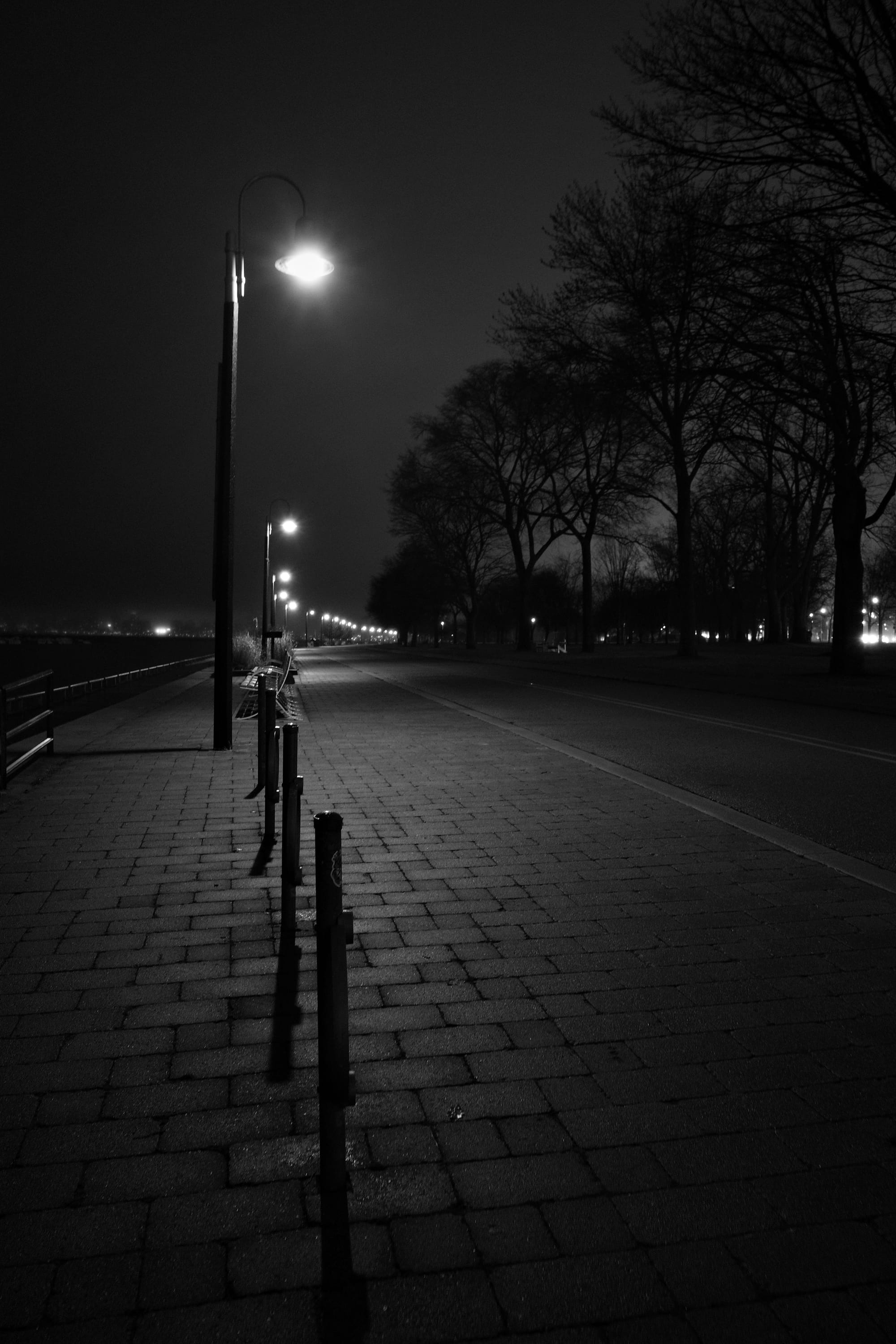
High-Pressure Sodium (HPS) lamps are arguably the most commonly used form of street lighting globally, being chosen for their high energy efficiency rating and long operating life.
Construction and Operation
HPS lamps generate light by passing an electric arc through vaporized sodium metal within a ceramic arc shaped tube. The tube also contains xenon and mercury and a very hot and corrosive sodium vapor.
Key Characteristics
- Color Quality: HPS lamps produce a deep yellowish-orange light. While this light is very sufficient for human perception, it has a very poor CRI usually between 20-30. This low CRI means they are not suitable for indoor spaces where colour accuracy is needed.
- Efficacy: These lamps are among the most efficient lighting types available as they emit 80-140 lumens per watt on average.
- Lifespan: HPS lamps often exceed 24,000 hours.
- Applications: HPS lamps are primarily used for outdoor and security lighting, where high energy efficiency and long life outweigh the need for a high CRI.
Mercury Vapor Lamps
Mercury vapor lamps are the oldest type of HID lighting that are still in common use, though they have been mostly superseded by the more efficient metal halide and high-pressure sodium lamps.
Construction and Operation
These lamps produce light by passing an arc through a tube containing mercury vapor and an inert starting gas. The main light output is blue-green in color produced primarily by the mercury's spectral emission lines.
Key Characteristics
- Color Quality: They produce a cool, bluish-white or green-white light. It has an average CRI of 40-55.
- Efficacy: They are the least efficient out of the three types listed here, typically ranging from 30 to 65 lumens per watt.
- Lifespan: They mostly offer a very long lamp life often up to 24,000 hours.
- Applications: They have been previously used for street lighting, area lighting, and industrial applications, but their use is now diminishing for more energy efficient options.

The Shift to LED Technology
It is worth mentioning that LED versions are being developed for these types of lamps. As LED lamps will almost always have longer lifespans; a lower energy usage and the ability to turn on immediately without the need to warm up the movement to this technology is the obvious choice for a brighter light that is more efficient in a number of watts compared to metal halide bulbs. Not to mention they do not require a separate ballast to operate and it is easier to dispose of them as they do not need any mercury to function.
Created by Adonia Watt on 28th January, 2026
Author
| | Adonia WattI have worked as a customer service representative at BLT Direct since 2018. My skills and knowledge have continued to develop from this point leading me to making contributions on the website. |


Louise Graham
7th October 2026
Excellent customer service throughout and great products
Tammy Fernando
7th October 2026
Great service! Really supportive of all my questions in my journey to go from LED (bad for our health) to incandescent lighting. Thank you so much! Tammy