Loading basket...



What are LED strips?
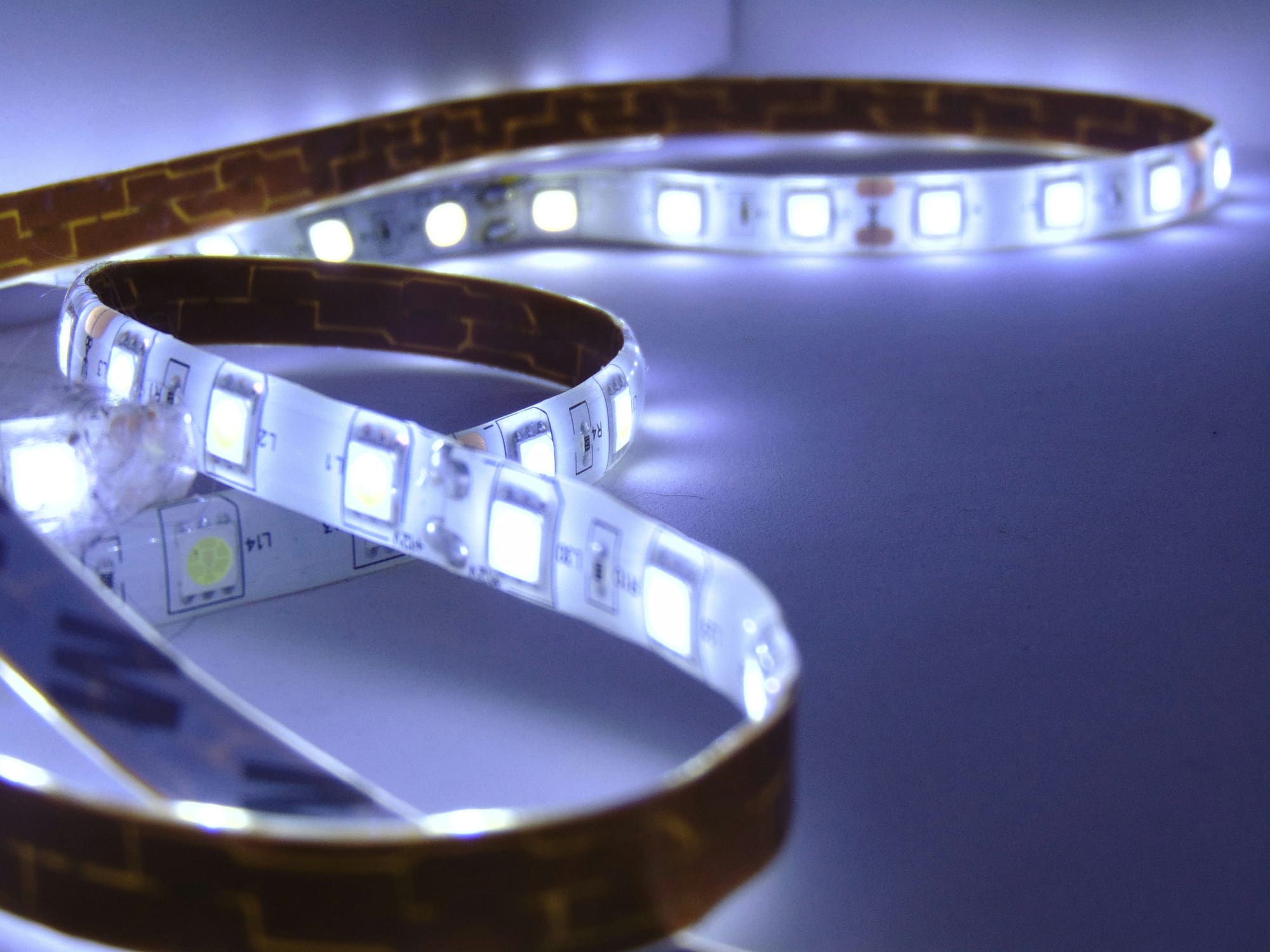
LED strips also known as LED tape or cob/seamless tape. These strips are designed to be used in various applications such as accent lighting, general lighting and decorative lighting.
These strips typically come on reels but can be cut to size to fit specific installation requirements. The back of the strip is normally coated with a strong adhesive backing making it easier for installation.
Key components and features
- COB/seamless LED is a LED strip which has no dotting
- Flexible PCB (printed circuit board) this is a thin black or white strip that holds all the components and wiring and its flexibility allows the strip to bend and go around corners.
- Resistors are integrated in the circuit to regulate the current to ensure longevity and brightness
- Cut Marks are designated points along the strip (typically every 5cm) where the strip can be cut without damaging the circuit
- Adhesive backing is a peel and stick layer on the back of the stirp for easy installation
Types of LED
LED strip offers options or almost any application
Single colour - this is a fixed colour option (e.g warm white, cool white, daylight or a single colour like blue or red)
Colour changing (RGB) - This strip has red, green and blue LEDs which can be mixed to create lots of colours and is controlled by a remote or a smart device.
RGBW/RGBWW - this is the same as above but with an added dedicated white or warm white colour
Tunable white - this strip allows the adjustment of the white led to go from warm white (yellow tinge) to cool white (bluey tinge)
What do LED strip plug into?
LED strips require a low voltage power supply usually 12V or 24V, they do not plug directly into the standard 240V wall sockets
The setup usually has three components
- LED strip - the light source
- Power supply - this device is needed to convert from 240V to 12V or 24V depending on the tape used. The power supply must be properly rated for the wattage you will be using (total wattage of the tape to be connected to power supply)
- Controller (optional but commonly used) - for colour changing (RGB) or dimmable single colour strip a controller/receiver is placed between the strip and the power supply which allow the strip to be dimmed and change colours via a remote or an app.
In basic plug and play kits the power supply and controller would be integrated in a single unit and then be attached to a standard wall plug. These can be used for easy diy installations but for larger or custom installations you would need separate components
Do I need an electrician to install LED strip?
This really depends on the installation - DIY installation is commonly ok when installing plug and play kits , using a power supply that plugs in a standard socket and if the set up is low voltage (12V or 24V)
An electrician would be required when hard wiring for concealing a power supply inside a wall or ceiling or if you are wiring the power supply directly to your home's main electrical wiring as this involves working with high voltage 240V.
You should also use an electrician when installing LED strip in wet or outdoor locations as they often require waterproof connections or specialised conduit.
Do LED strips run up the electric bill?
The answer is no LED strip is one of the most cost effective lighting options available and generally have a negligible impact on an electric bill.

Created by Adonia Watt on 3rd February, 2026
Author
| | Adonia WattI have worked as a customer service representative at BLT Direct since 2018. My skills and knowledge have continued to develop from this point leading me to making contributions on the website. |


Louise Graham
7th October 2026
Excellent customer service throughout and great products
Tammy Fernando
7th October 2026
Great service! Really supportive of all my questions in my journey to go from LED (bad for our health) to incandescent lighting. Thank you so much! Tammy