Loading basket...



Why Do Solar Lights Stop Working?
Solar lights are designed to be a simple, energy efficient, and low maintenance lighting solution. But like any lighting product, they can sometimes stop working properly over time. In many cases the problem will be fairly small and can be solved easily without having to replace the entire fitting.
Solar lights rely on several components working together correctly which include:
- the solar panel,
- rechargeable battery,
- LED bulb,
- light sensor,
- internal circuitry.
If any one of these parts develops a problem this can cause the light to no longer turn on, become dim, or operate inconsistently.
The Most Common Reasons Solar Lights Stop Working
1. Insufficient Sunlight
The most common reason solar lights stop working is because the battery is not receiving enough charge from sunlight. Solar panels need direct daylight to recharge properly. If the panel is shaded by trees, fences, buildings, or any other exterior objects the battery may not charge fully enough to power the light at night.
This issue becomes especially noticeable during winter and cloudy weather. A high quality solar light will struggle if it does not receive adequate sunlight. One method to try and counteract this is to check the positioning of the solar panel and to ensure that it is in the best position possible to receive the most sunlight.

2. Dirty Solar Panels
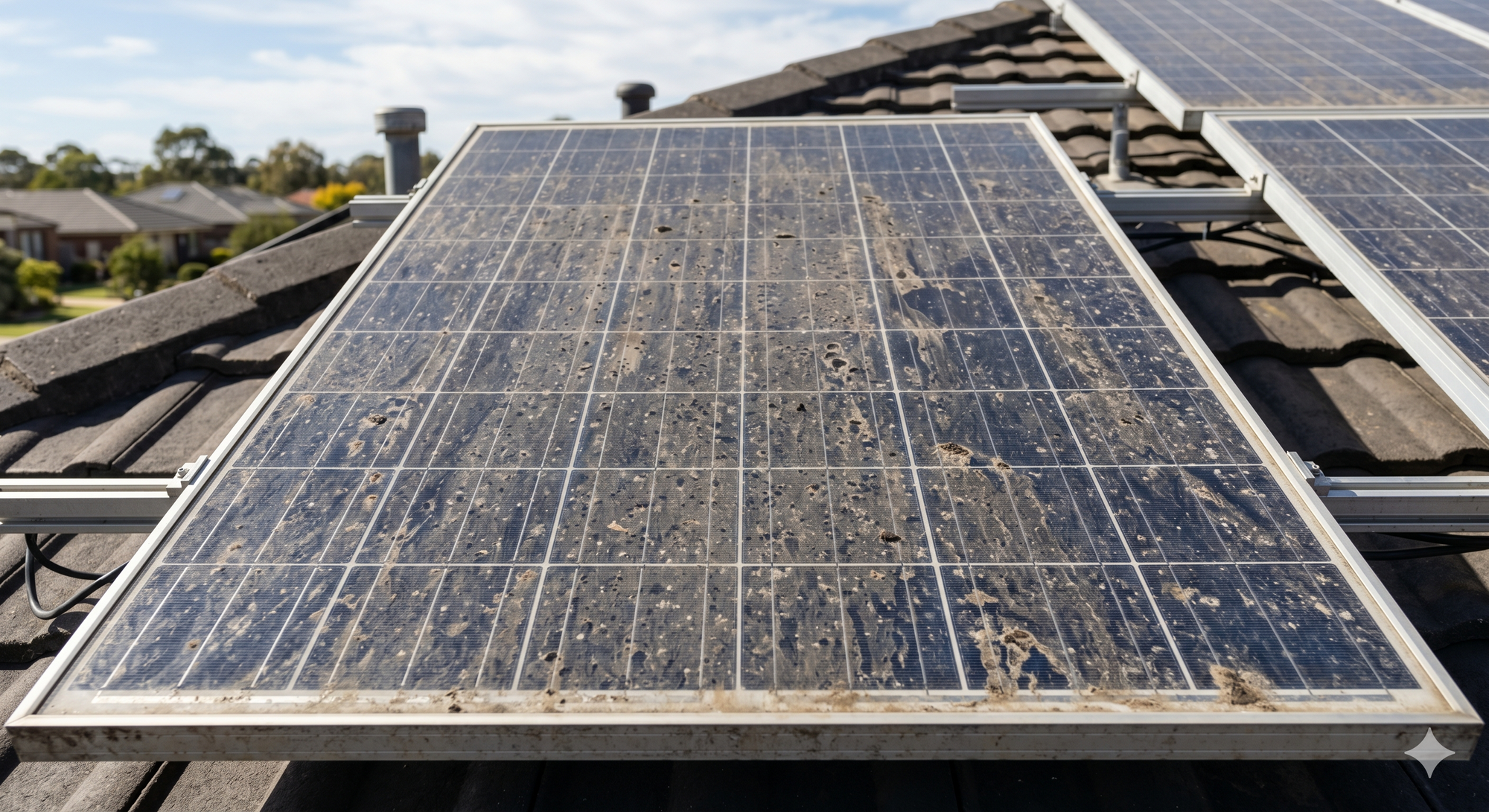
Over time, solar panels can become covered with dust, dirt, and residue. This can block the sunlight from reaching the photovoltaic cells which reduce the charging efficiency of the light. A dirty panel may still generate some power but it will often prevent it from generating power at an optimal capacity.
You can combat this by cleaning the panel gently with a soft cloth and warm water.
3. Worn Out Rechargeable Batteries
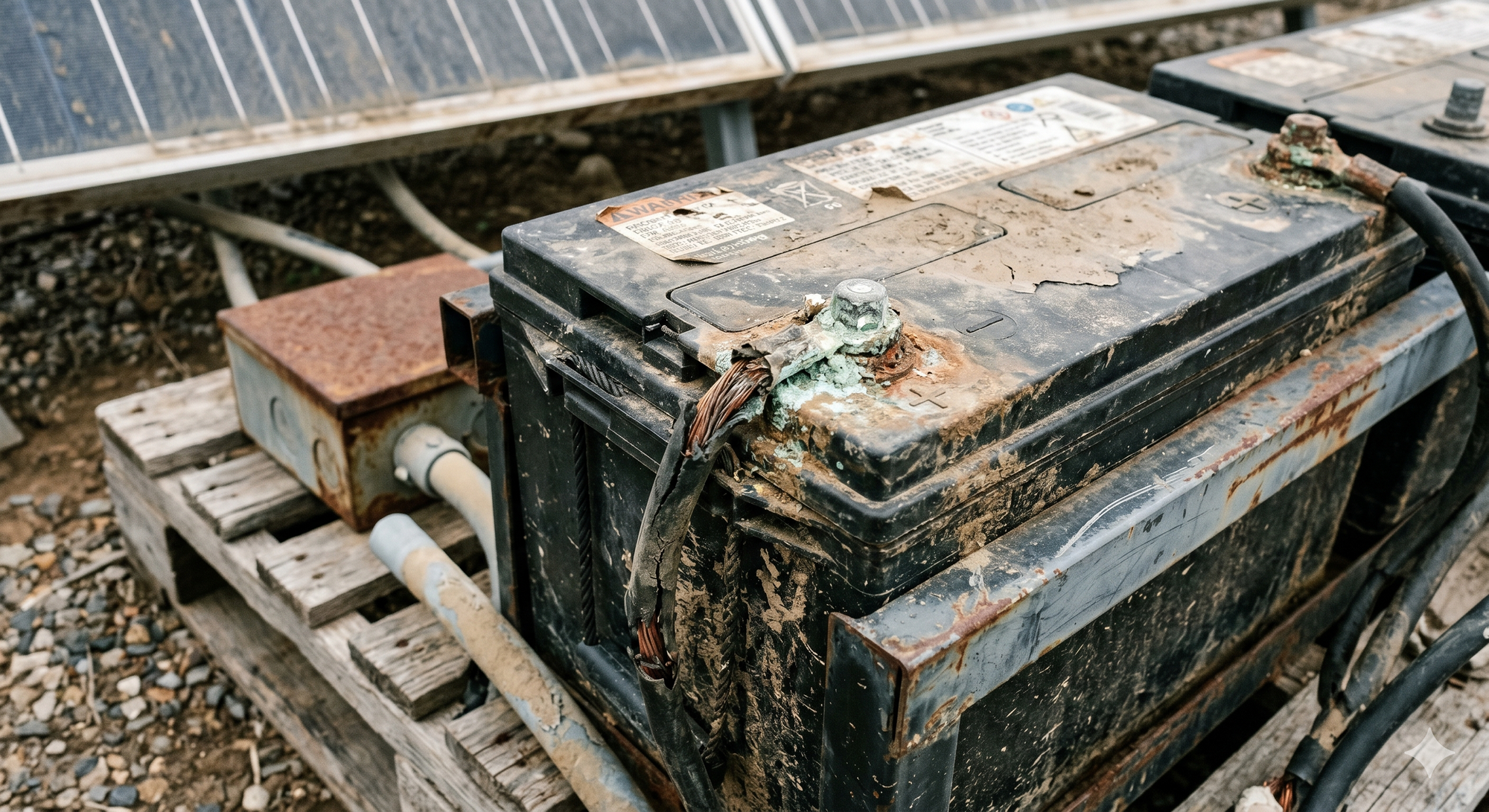
Solar lights use rechargeable batteries and this will inevitably wear out over time. Depending on the battery quality and usage most rechargeable batteries will last between 1 and 5 years. As batteries age they can lose their ability to hold charge properly. Common signs of this include shorter operating times, dim lighting, inconsistent performance, or the light will fail completely. Many solar lights allow the batteries to be replaced relatively easily.
4. Faulty Light Sensors
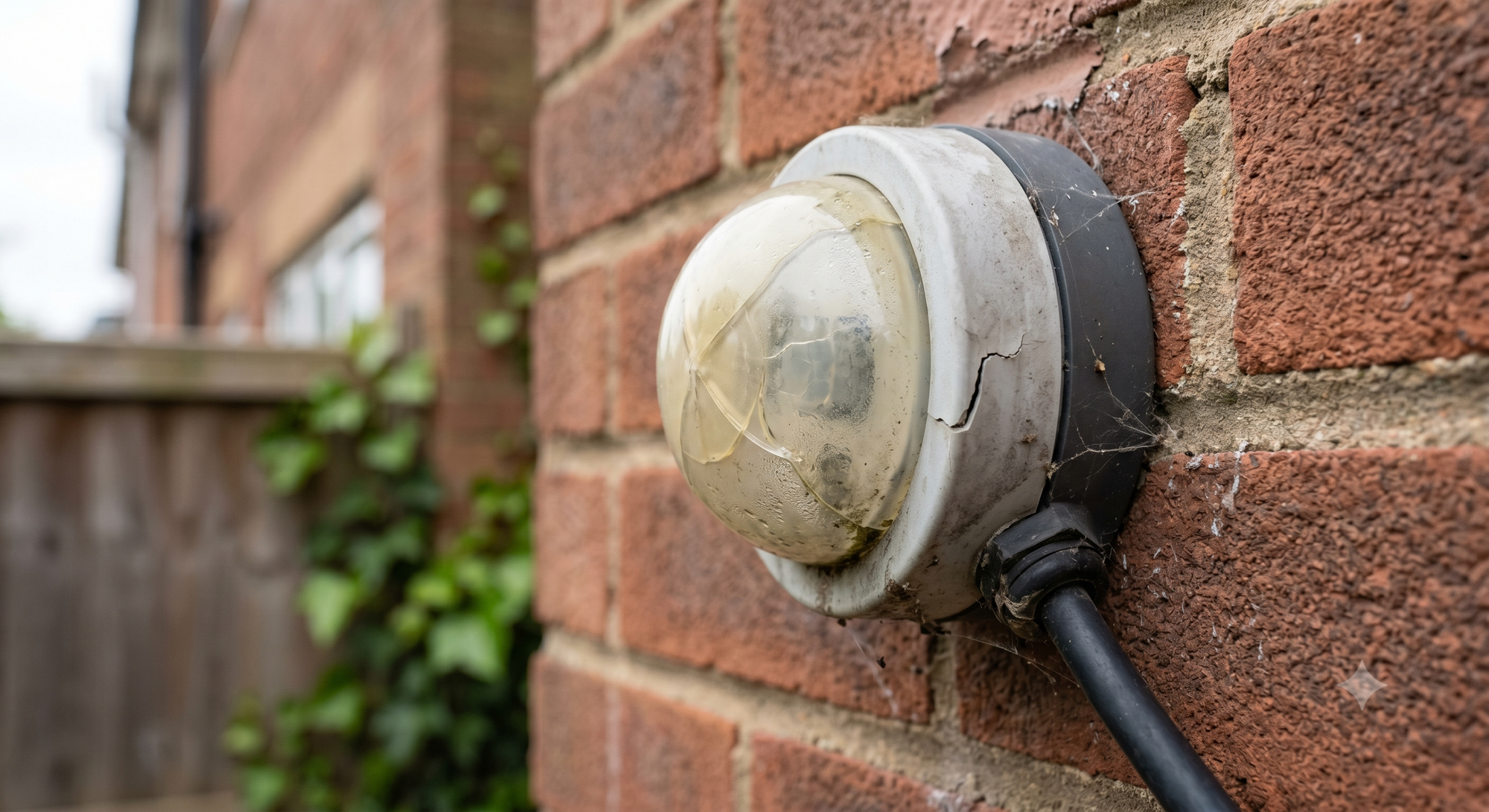
Most solar lights contain dusk to dawn sensors that automatically switch the light on at night and off during the day. If the sensor becomes faulty or blocked this can cause the light to stay off permanently, stay on during the day or fail to activate correctly at night.
Artificial light sources nearby such as streetlights or porch lights can also confuse the sensor which can prevent the solar light from switching on.
5. Water Damage
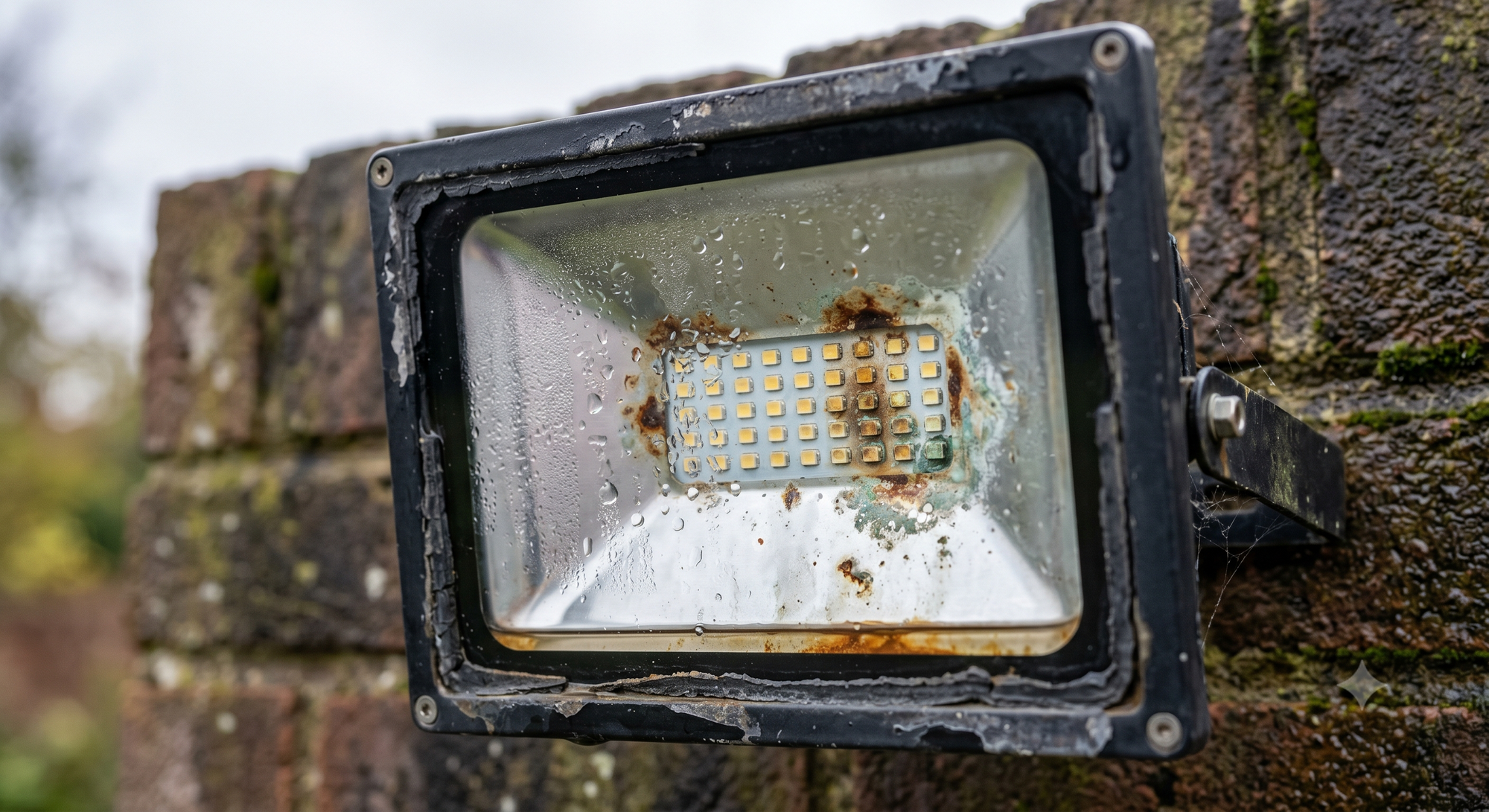
Although many solar lights are designed for outdoor use, lower quality models may suffer from water ingress. Moisture inside the fitting can cause damage to the internal components such as the batteries or the wiring. Signs of water damage to a solar light may include flickering, corrosion, inconsistent operation, or complete failure.
You should always ensure that a solar light is IP65 rated as this means it is rated to resist moisture and water splashes.
6. Battery Isolation Tabs or Switches
Some new solar lights include battery isolation tabs or small power switches that must be activated before use. If the switch is left switched off, or the battery tab is not removed, the light may never charge properly. This information should be stated in the manufacturer’s instructions.
7. End of Life LED Failure
LEDs generally last a very long time but they can fail eventually just like any other electronic item. If the above has not stopped the problem that has occurred this is something that should be considered.
8. Corroded Battery Contacts
Outdoor exposure can sometimes cause corrosion on battery terminals or electrical contacts. Corrosion can interrupt the electrical connection and prevent the battery from charging or powering the light correctly.
Why Solar Lights Often Fail in Winter
Many people notice solar lights perform worse during winter months. This can happen because daylight hours are shorter, sunlight intensity will be lower and some batteries will charge less efficiently in cold temperatures. Even fully functioning solar lights may operate for fewer hours during winter than during summer.
When Should You Replace a Solar Light?
Replacement may be the best option if the solar panel is damaged, the electronics have failed, the fitting has severe water damage, or replacement parts are unavailable.
How to Fix Solar Lights That Have Stopped Working
Many solar lighting issues can be resolved with simple maintenance. You can try these steps below to resolve the problem:
Check Nearby Light Sources: Strong nearby lighting from other sources may interfere with the dusk sensor.
Test the Switch: Make sure that the light is switched on and any battery tabs have been removed.
Inspect the lights for Water Damage: Look for condensation, corrosion, or damaged seals.
Replace the Batteries: If the batteries are old you may need to replace them to restore full performance.
Check the Position: Ensure that the panel receives direct sunlight for as much of the day as possible.
Clean the Solar Panel: Remove dirt and debris regularly to maximise charging efficiency.
Summary
Solar lights usually stop working because of charging problems, worn out batteries, poor sunlight exposure, or weather related issues. Since solar lighting systems rely on both rechargeable batteries and photovoltaic panels, even small problems can significantly affect the lights performance.
The most common causes of a solar light no longer working will be insufficient sunlight, dirty solar panels, ageing batteries, faulty sensors or water damage. Regular cleaning, good positioning, and occasional battery replacement can help keep solar lights working reliably for many years.
Created by Adonia Watt on 4th June, 2026
Author
| | Adonia WattI have worked as a customer service representative at BLT Direct since 2018. My skills and knowledge have continued to develop from this point leading me to making contributions on the website. |


Louise Graham
7th October 2026
Excellent customer service throughout and great products
Tammy Fernando
7th October 2026
Great service! Really supportive of all my questions in my journey to go from LED (bad for our health) to incandescent lighting. Thank you so much! Tammy