Loading basket...



What does SMD mean for LED lights?
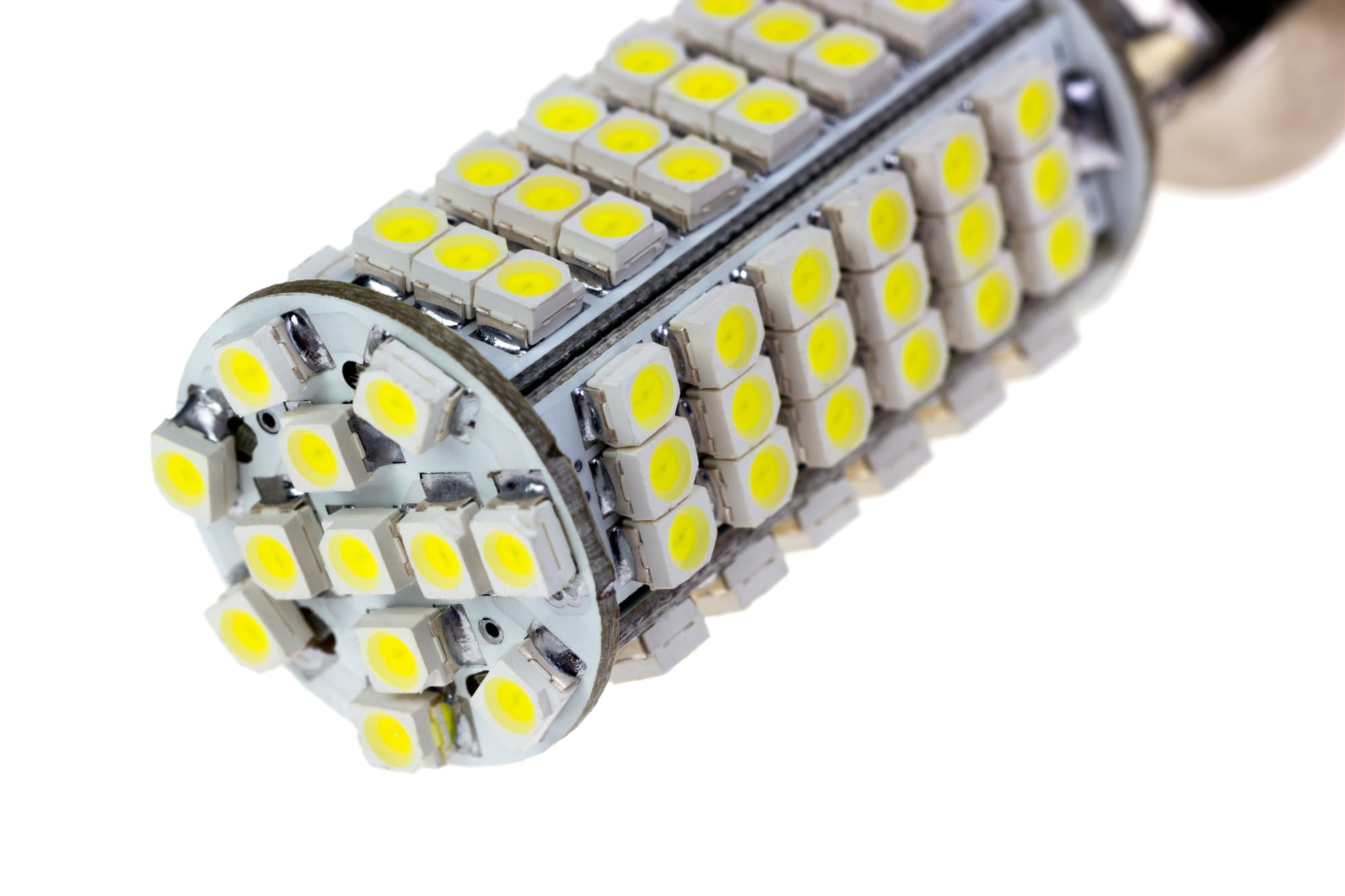
SMD stands for Surface-Mounted Diode — a modern type of LED technology in which the light-emitting diodes are soldered directly onto a circuit board rather than contained within a separate bulb or casing.
This design makes the LEDs lighter, more compact, and far more efficient at both emitting light and dissipating heat. For this reason, SMD LEDs are now used in everything from LED strip lights to household LED bulbs, spotlights, and commercial fittings.
In our LED Strip Light product range, you’ll notice that most products reference SMD types such as 3528, 5050, or 2835. These numbers refer to the size of the LED chip in millimetres — for example, SMD 5050 indicates that each diode measures 5.0 mm × 5.0 mm.
Different chip sizes produce different brightness levels and are suited to a variety of lighting applications, from subtle accent lighting to high-intensity illumination.
Which Is Better - SMD or LED?
It’s a common question, but technically, SMD is a type of LED. LED (Light-Emitting Diode) refers to the core technology, while SMD describes how the diodes are packaged and mounted.
Earlier LED products used DIP technology, which featured small bulb-shaped components with wire legs. They were sturdy but less efficient and often produced streaky light. SMD LEDs, on the other hand, use a flat, compact design that allows for more diodes per inch, resulting in brighter, smoother, and more efficient lighting.
In short, SMD LEDs are an improved form of LED technology — more advanced, longer-lasting, and capable of producing cleaner light with better colour accuracy.
You’ll find this technology in most modern LED light bulbs, as it offers an ideal balance of energy efficiency and brightness.
What Are the Disadvantages of SMD LEDs?
Although SMD LEDs offer many benefits, there are a few minor trade-offs to be aware of:
Heat management: Because SMD chips are compact yet powerful, they generate more heat per square inch. High-quality fixtures use proper heat sinks or aluminium backings to dissipate this effectively.
Repair complexity: If a single diode fails, replacing just that one SMD component is difficult - in most cases, the entire strip or module needs to be replaced.
Initial cost: SMD LEDs are slightly more expensive than earlier LED designs, although they save more energy and last longer, offsetting the initial investment.
Overall, these small drawbacks are outweighed by the advantages of SMD LEDs - particularly their brightness, versatility, and energy efficiency - which more than compensate for the trade-offs.
How Do I Know If My LED Is SMD?
You can usually identify SMD LEDs by examining the light source visually. They appear as small, flat, square chips (typically yellow or white) arranged in an orderly line along a strip or circuit board. Each chip functions as a single light source.
If you see small square components on your LED strip or bulb, they are most likely an SMD type. Some of the more common varieties include:
- SMD 3528: Lower power and smaller in size, ideal for decorative or accent lighting.
- SMD 5050: Brighter chips capable of RGB colour mixing.
- SMD 2835: A newer, more efficient option that produces more light while consuming less energy.
You can find clear examples within our LED Strip Light range, where each product listing specifies the type of SMD used.
What Are the Benefits of SMD LED Lights?
SMD LEDs are the industry standard because they offer several key benefits:
Efficient power usage: SMD LEDs consume significantly less power than incandescent or halogen lights while providing equivalent brightness.
Thin profile: Being mounted on a flat plane allows for ultra-thin, flexible products such as LED strips and panels.
Brighter output: SMD chips can be positioned very close together, resulting in higher lumen output.
Colour flexibility: SMDs can support multiple colours or chip blending, enabling tunable white and RGB lighting.
Longer lifespan: With proper heat management, SMD LEDs can last 30,000–50,000 hours or more.
Even illumination: Their wide beam angle produces smooth, uniform lighting with minimal shadows.
What's the Difference Between SMD and COB LEDs?
Another commonly misunderstood distinction is between SMD and COB (Chip on Board) LEDs.
Both are advanced technologies, but they are suited to slightly different purposes:
SMD LEDs provide greater colour control and flexibility, while COB LEDs are ideal for producing high brightness over a concentrated area.
Where Are SMD LEDs Used?
As efficient and versatile as they are, SMD LEDs are used in nearly every type of lighting device available today, including:
- Household and outdoor LED strip lighting
- Ceiling panels and downlights
- LED bulbs and lamps
- Signage and display lighting
- Architectural and decorative lighting
If you’re planning a home or commercial lighting project, our range of LED Light Bulbs and LED Strip Lights covers every possible application, from subtle mood lighting to bright, functional illumination.
In Summary
SMD LEDs represent one of the most significant advancements in lighting technology. They are efficient, compact, bright, and versatile, providing long-lasting performance and exceptional light quality. Whether you’re upgrading to SMD LED bulbs or installing SMD LED strips, you’ll enjoy lower energy bills, reduced maintenance, and greater design flexibility.
Created by Gary Baker on 9th October, 2025
Author
 | Gary BakerBLT Direct |


Roberts Brūveris
20th January 2026
Largest bulb collection I have ever seen and the website is great with lots of information to select the right bulb for your needs and easy to use. Prices are also good.
Roger Foster
19th January 2026
Great Product. reliable Service. Many Thanks